Meaning, symbolism, healing traditions, uses and care
Turquoise
Turquoise is a sky-blue to green copper mineral, and one of the oldest gemstones people have worn. In contemporary crystal practice it is the stone of communication, truth and protection, connected above all with the Throat.
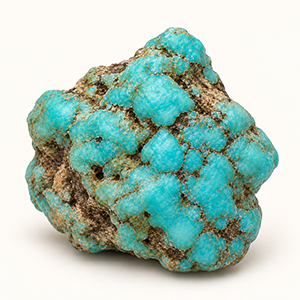
Its early meanings were bright ones. The ancient Egyptians called it mefkat, a word linked with joy and delight, and wore it in beads, bracelets and amulets thousands of years ago.
At a glance
- Color
- Sky blue, blue-green to green
- Mineral
- Turquoise (hydrated copper aluminum phosphate)
- Hardness
- Approximately 5 to 6 on the Mohs scale
- Appearance
- Semitranslucent to opaque
- Birthstone
- December
- Important historical sources
- Iran, Sinai and other dry copper-rich regions
- Energy center
- Throat, with some traditions also connecting turquoise with Heart energy
Turquoise forms in dry regions where copper-rich groundwater moves through rocks containing aluminum and phosphorus, building up in veins, nodules and irregular masses. Copper gives the blue; shifts in composition pull it toward green. Unlike transparent gems, it is valued for color and texture, not light passing through. The dark spiderweb lines in some stones are matrix: pieces of the host rock it grew in.
What turquoise represents today
In contemporary crystal and metaphysical traditions, turquoise is associated with communication, truth, calm and authentic expression: bringing the voice you use outside closer to the one inside. It is also a protection stone, described as lighter than dense black stones such as obsidian or black tourmaline, protection that lets you stay open and connected. Its blue-green color links it with the space between Heart and Throat, the move from feeling something to being able to say it.
A short history
Archaeological evidence shows turquoise in use in ancient Iran around the seventh millennium BCE. In Persia its name, piruzeh, became linked with victory and prosperity, and the scholar al-Biruni wrote of a belief that it could protect against the evil eye. The stone found its own meanings in China, Tibet and across the Americas, and those traditions were never one and the same.
A porous stone that takes things in
Turquoise is naturally porous, so treatments are extremely common: stabilizing with polymers, waxing, dyeing, or binding small pieces with resin. Even its most famous name is not proof of origin. “Persian blue” is a trade term for an even sky-blue color, whether or not the stone came from Iran. A treated stone is not worthless, but treatment should be disclosed.
What people often misunderstand about turquoise
The common shortcut is: I can’t express myself, so I need turquoise. But the same struggle with words can come from opposite places.
One person knows exactly what they want to say and holds back, perhaps to avoid conflict. Another talks easily and often, yet cannot name what they actually feel. The first may want a steadier voice. For the second, more expression can simply mean more words that still miss the point.
What is missing is not always volume. It may be confidence, or boundaries, or enough calm to choose words instead of reacting. Sometimes it is listening.
Truth, in turquoise’s sense, is not saying more. It is saying what is real, and that can mean a clear no, a plain request, or saying less.
When turquoise may not be what you need
If you express yourself easily but tend to speak before you know what you feel: reflection or emotional clarity may need to come first.
If speaking up is hard mainly because setting limits does not feel safe, the more relevant quality may be boundaries or grounding.
If you keep explaining and justifying yourself so others will understand you, the next step may be getting comfortable saying less.
If you want protection because you feel constantly exposed to your surroundings, you may need stronger grounding than turquoise’s lighter kind.
None of this makes turquoise the wrong stone. Sometimes the words are ready; sometimes something underneath them needs attention first.
The My Crystal Code view
The same silence, different reasons
Turquoise speaks to voice and truth, but a quiet throat can hide many different stories. Knowing what a crystal traditionally represents is not the same as knowing whether it is the right crystal for you right now. My Crystal Code looks at the whole person before suggesting any support, not a single word like “communication.”
How people use turquoise
- Jewelry: Necklaces and pendants are especially popular because they sit close to the throat.
- Conversations: Hold it or keep it nearby when preparing for a meaningful conversation or presentation.
- Meditation: Place a polished stone near the throat during meditation or a crystal layout.
- Travel: Carry it on journeys, drawing on its long association with protection and good fortune.
- Journaling: Keep it close when reflecting on what feels difficult to say.
Caring for turquoise
- Cleaning: Warm water, a little mild soap and a soft cloth.
- Soaking: Avoid prolonged soaking.
- Steam and ultrasonic: Never steam clean turquoise, and avoid ultrasonic cleaners.
- Heat: High heat can cause discoloration or damage.
- Chemicals: Keep it away from household cleaners, acids and solvents.
- Cosmetics and skin: Perfume, lotions and metal polish can affect the color of natural porous turquoise; skin oils and perspiration may slowly change some untreated stones.
- Storage: Store it apart from harder gemstones to prevent scratching.
Because treatments are common, gentle care matters most when you do not know a piece’s treatment history.
Questions people often ask
Can turquoise go in water?
Briefly, for ordinary cleaning. Avoid long soaking: turquoise is porous and may also be treated.
Can turquoise go in an ultrasonic cleaner?
No. Warm soapy water and gentle hand cleaning are the better choice.
Is turquoise commonly treated?
Yes. Stabilization, waxing, dyeing and other treatments are common, particularly in more porous material.
How can I tell whether turquoise is natural?
Appearance alone is not always enough, because treatments and imitations can be convincing. For valuable pieces, a reputable seller or a professional gemological examination is more reliable than home tests.
Is Persian turquoise always from Iran?
No. “Persian blue” describes a desirable even sky-blue color in the gem trade, regardless of where the stone was mined.
Is turquoise the right crystal for me?
It may be. Its meaning tells you what the stone represents; whether that is the support your voice needs right now is a personal question, and that is where My Crystal Code begins.
Discover which crystals fit you right now
Turquoise tells you what it stands for. The next question is what you actually need to say, or to hear.
Start your readingSources
- Gemological Institute of America (GIA): Turquoise Gem Encyclopedia, History & Lore, Persian Turquoise research, Quality Factors, Treatments and Care resources.
- The Metropolitan Museum of Art: Ancient Egyptian turquoise objects and medieval Persian turquoise beliefs.
- Historical and archaeological collections: Turquoise jewelry, amulets, ceremonial objects and long-distance cultural use across Egypt, Iran, Asia and the Americas.
More in the Crystal Library
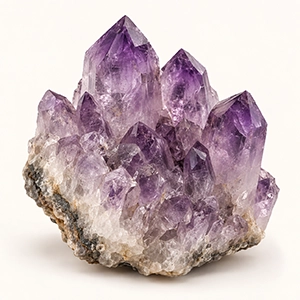 Amethyst
Purple quartz, once a stone of sobriety, linked today with calm and clarity.
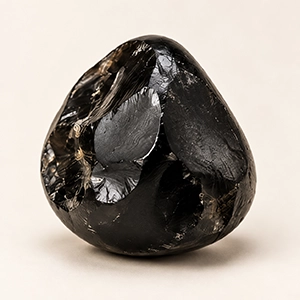 Apache Tear
Small obsidian pebbles from Arizona perlite, linked today with grief and release.
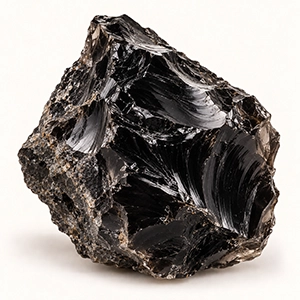 Black Obsidian
Natural volcanic glass, once blades and mirrors, linked today with grounding.
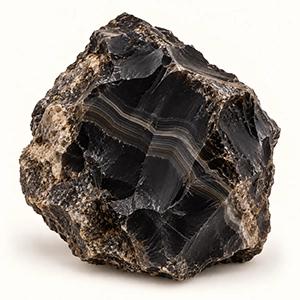 Black Onyx
Black chalcedony of Roman intaglios and cameos, linked today with boundaries.
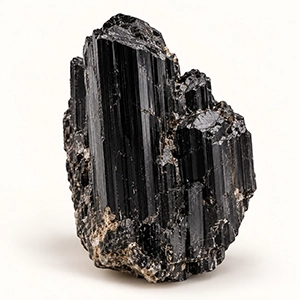 Black Tourmaline
Black schorl tourmaline, a record of the rocks it grew in, linked today with protection.
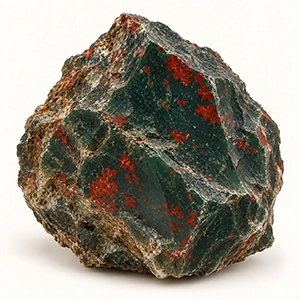 Bloodstone
Green stone flecked with red, the heliotrope of Rome, linked today with courage.
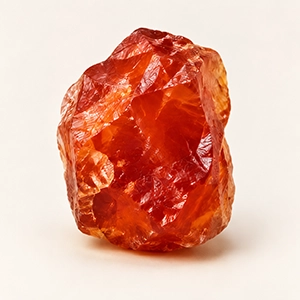 Carnelian
Orange-red chalcedony, carved since the Indus Valley, linked today with vitality.
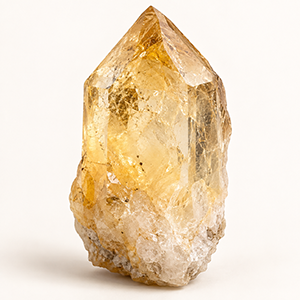 Citrine
Golden quartz, often heated amethyst, linked today with confidence and abundance.
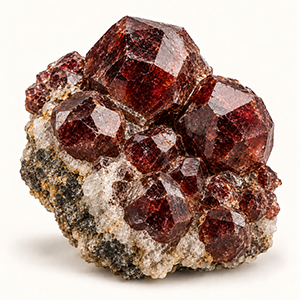 Garnet
A family of deep red gems, worn since ancient Egypt, linked today with vitality.
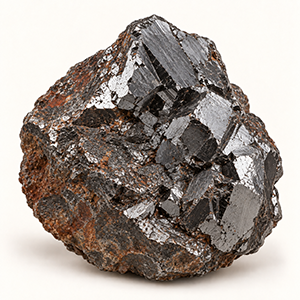 Hematite
Metallic iron mineral, once red ochre and pigment, linked today with grounding.
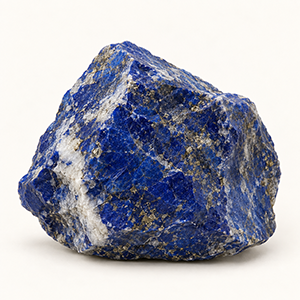 Lapis Lazuli
Deep blue stone from Afghanistan, once ground into the costliest blue in art.
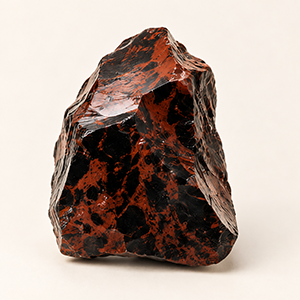 Mahogany Obsidian
Black and red-brown volcanic glass, once mirrors, linked today with resilience.
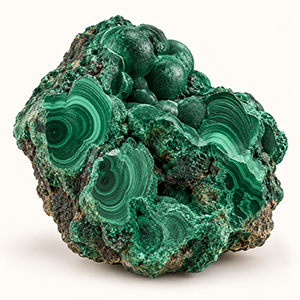 Malachite
Banded green copper mineral, once eye paint and pigment, linked today with change.
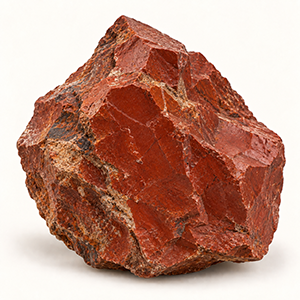 Red Jasper
Opaque red stone of Egyptian amulets and seals, linked today with endurance.
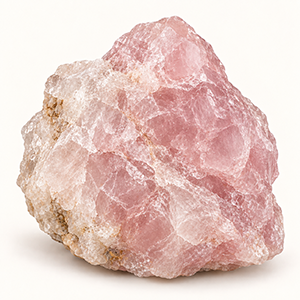 Rose Quartz
Pink quartz, worn for thousands of years, linked today with love and the Heart.
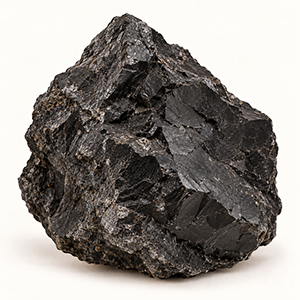 Shungite
Ancient carbon-rich rock from Karelia, linked today with protection and clearing.
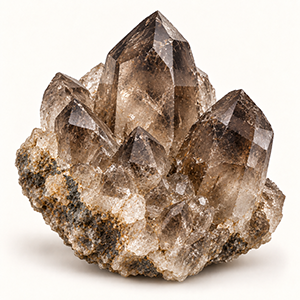 Smoky Quartz
Smoky brown quartz, Scotland’s cairngorm, linked today with gentle grounding.