Meaning, symbolism, healing traditions, uses and care
Shungite
Shungite is a black, carbon-rich rock from Karelia in northwestern Russia. It is not a transparent gemstone, and not a single mineral. In contemporary crystal practice it is the stone of grounding and clearing, connected with the Root.
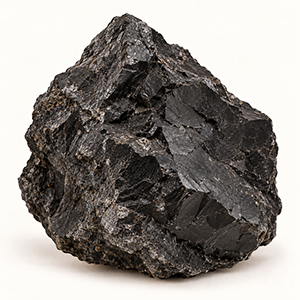
Its story is geological rather than ancient. The Karelian formations it comes from are about two billion years old, yet the material was only described scientifically in 1879. Its spiritual reputation grew around a genuinely unusual natural carbon, not around old myth.
At a glance
- Color
- Black, steel-black to dull black
- Material
- Carbon-rich mineraloid and carbonaceous rock rather than a single conventional mineral species
- Carbon content
- Highly variable, from carbon-poor shungite-bearing rock to very high-carbon material
- Appearance
- Opaque, ranging from dull and earthy to submetallic or lustrous
- Notable locality
- Karelia, northwestern Russia, especially the Lake Onega region and the area around Shun’ga
- Geological age
- Major Karelian shungite-bearing formations are approximately two billion years old
- Energy center
- Root
The name shungite covers more than one related material. Some high-carbon pieces may contain more than 90 percent carbon; others hold far more silica and other minerals. So two black stones sold under the same name can behave very differently. Shungite is better understood as a family of Karelian carbon-rich materials than as one gemstone with one fixed formula.
What shungite represents today
In contemporary crystal and metaphysical traditions, shungite is associated with grounding, protection, clearing and purification, with a dense, Earth-connected character. Where black tourmaline is linked with boundaries and obsidian with shadow work, shungite is linked with filtering: clearing what feels heavy, not only keeping things out.
Black, dense and ancient, it is also kept beside phones and computers as a grounding counterpoint to the speed of life on screens.
A short history
Shungite takes its name from the Shun’ga area in Karelia, where the Russian geologist Alexander Inostrantsev described the material in 1879. The rock itself is immensely older: the region around Lake Onega holds enormous accumulations of carbonaceous material more than two billion years old. Unlike jade, lapis or turquoise, shungite has no documented ancient spiritual tradition; its metaphysical identity is modern.
What scientists find in the carbon
Under microscopy and spectroscopy, shungite’s carbon appears in nanoscale clusters, disordered rather than arranged like ordinary graphite. High-carbon pieces conduct electricity, and researchers have tested shungite in electrodes, catalysis and battery research. It has also been studied as a water adsorbent, which is probably one reason purification became so central to its modern reputation.
What people often misunderstand about shungite
The common shortcut is: if you need protection, reach for shungite. But the same request can come from opposite places.
For someone who feels scattered and affected by everything, a dense, grounding stone may be exactly right. For someone already focused on threats in their environment, another purification symbol can reinforce vigilance rather than ease. One person needs clearer separation; another, already withdrawn, needs more connection.
And sometimes “I need protection” really means “I am exhausted.” What is missing then may be restoration, not another shield.
Clearing is also only half the process. The more useful question is often what you want the cleared space to hold.
When shungite may not be what you need
If you already spend much of your attention monitoring what feels negative or harmful around you, and what is missing is what nourishes you.
If you are withdrawn and protective of your energy, and connection or openness matters more than another layer of shielding.
If you feel heavy, stagnant or far from enthusiasm: another dark Root stone may not be the support that brings balance.
If your practice has become mostly clearing and removing, and you have not yet asked what you want to strengthen afterward.
None of this makes shungite the wrong stone. Its grounding character can be deeply useful; protection and purification are simply not the answer to every kind of discomfort.
The My Crystal Code view
A shield is not always the answer
Shungite’s reputation for protection is strong, but a reputation describes the stone, not the person holding it. Knowing what a crystal traditionally represents is not the same as knowing whether it is the right crystal for you right now. My Crystal Code looks at the whole person before suggesting any support: the person comes first, the crystal second.
How people use shungite
- Grounding meditation: Hold a polished piece, or place one near the feet.
- Near electronics: Keep it by a computer, phone or router. EMF protection is a popular metaphysical association, not a verified health claim.
- Clearing rituals: Hold it during reflection focused on releasing what feels heavy.
- Carrying: Wear it or keep a polished piece with you as part of a protection practice.
- Personal spaces: Place it where you want a stronger sense of stability.
Caring for shungite
- Cleaning: Wipe polished pieces with a soft damp cloth.
- Water: Brief contact during cleaning is enough; long soaking is unnecessary.
- Residue: Some raw or lower-polish pieces may leave black carbon residue on hands or cloth.
- Chemicals: Avoid harsh chemical cleaners.
- Impact: Protect lustrous high-carbon pieces from drops and sharp impacts.
- Storage: Keep softer or highly polished pieces apart from harder gemstones that could scratch them.
- Drinking water: Do not put an unidentified commercial stone in drinking water, or drink water a stone has soaked in.
Composition varies from piece to piece, so gentle external use is the simplest approach.
Questions people often ask
Is shungite a crystal?
Not in the strict mineralogical sense. It is a carbon-rich mineraloid and rock, though it is widely included in crystal practice.
Should I drink shungite water?
Best not. Natural shungite is not pure carbon, and some samples can release metals into water. You can work with the stone symbolically without drinking anything it has touched.
Does shungite block EMF?
Not in any verified way. Its carbon has measurable electrical properties, but that does not establish meaningful personal protection from everyday electromagnetic exposure. EMF protection is a popular metaphysical association, not a verified health claim.
Does shungite contain fullerenes?
Fullerene-related carbon has been reported in it, but only at trace levels. An ordinary stone is not mainly made of C60 fullerenes; its real carbon structure is more complex.
Is shungite the right crystal for me?
It may be. Its reputation describes the stone; whether its character suits where you are right now is a personal question, and that is where My Crystal Code begins.
Discover which crystals fit you right now
Protection is one meaning among many. The next question is which qualities, and which crystals, are actually relevant to you now.
Start your readingSources
- Scientific mineralogical references and Mindat: Shungite terminology, Karelian locality, carbon-rich composition and fullerene content.
- Earth-Science Reviews and International Journal of Coal Geology: Karelian shungite geology, approximately two-billion-year age, carbon structure and physical properties.
- Peer-reviewed materials and electrochemistry research: Shungite conductivity, adsorption, electrodes, electrocatalysis and emerging energy-storage applications.
More in the Crystal Library
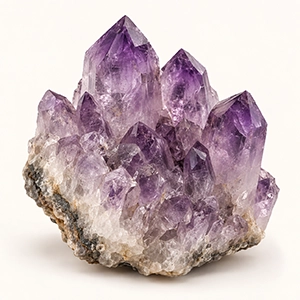 Amethyst
Purple quartz, once a stone of sobriety, linked today with calm and clarity.
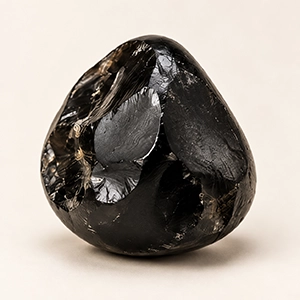 Apache Tear
Small obsidian pebbles from Arizona perlite, linked today with grief and release.
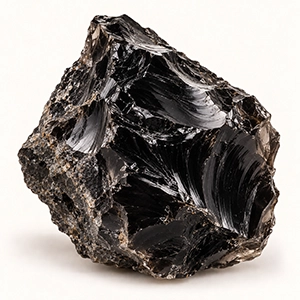 Black Obsidian
Natural volcanic glass, once blades and mirrors, linked today with grounding.
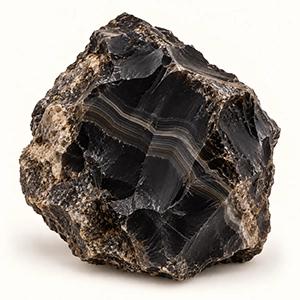 Black Onyx
Black chalcedony of Roman intaglios and cameos, linked today with boundaries.
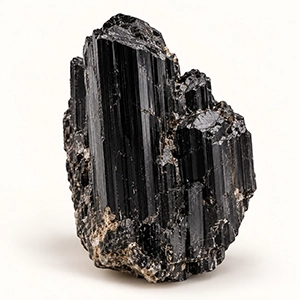 Black Tourmaline
Black schorl tourmaline, a record of the rocks it grew in, linked today with protection.
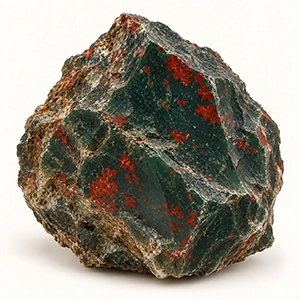 Bloodstone
Green stone flecked with red, the heliotrope of Rome, linked today with courage.
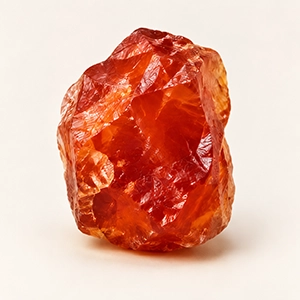 Carnelian
Orange-red chalcedony, carved since the Indus Valley, linked today with vitality.
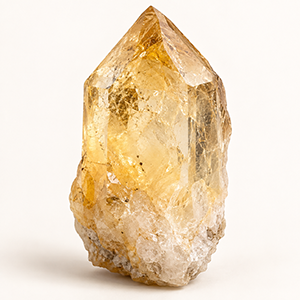 Citrine
Golden quartz, often heated amethyst, linked today with confidence and abundance.
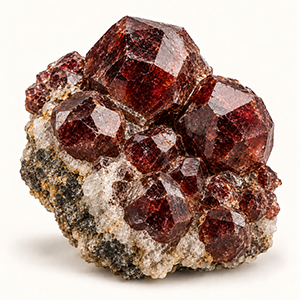 Garnet
A family of deep red gems, worn since ancient Egypt, linked today with vitality.
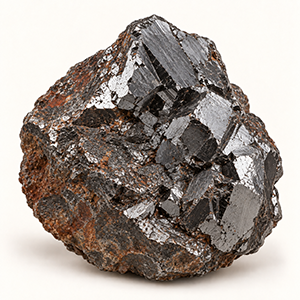 Hematite
Metallic iron mineral, once red ochre and pigment, linked today with grounding.
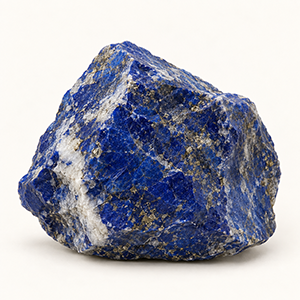 Lapis Lazuli
Deep blue stone from Afghanistan, once ground into the costliest blue in art.
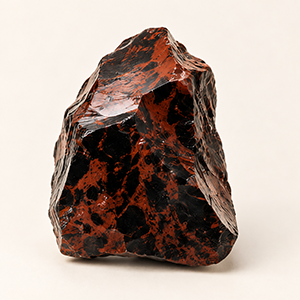 Mahogany Obsidian
Black and red-brown volcanic glass, once mirrors, linked today with resilience.
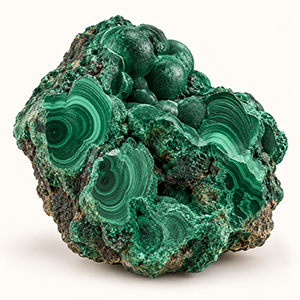 Malachite
Banded green copper mineral, once eye paint and pigment, linked today with change.
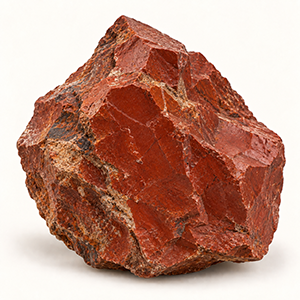 Red Jasper
Opaque red stone of Egyptian amulets and seals, linked today with endurance.
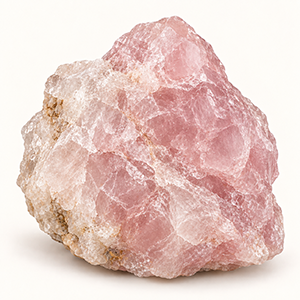 Rose Quartz
Pink quartz, worn for thousands of years, linked today with love and the Heart.
 Smoky Quartz
Smoky brown quartz, Scotland’s cairngorm, linked today with gentle grounding.
 Turquoise
Sky-blue copper mineral, treasured from Egypt to Persia, linked today with protection.