Meaning, symbolism, healing traditions, uses and care
Rose Quartz
Rose quartz is the pink variety of quartz, ranging from almost milky white with the faintest blush to a deeper rose. In contemporary crystal practice it is known as the “stone of love,” connected with the Heart.
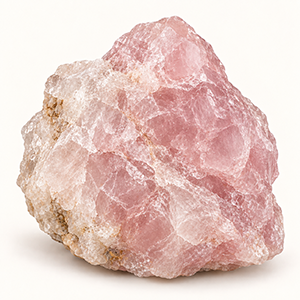
Its story is far older than that name. People shaped, wore and valued rose quartz for thousands of years, long before today’s language of self-love and the Heart energy center existed.
At a glance
- Color
- Very pale pink to deeper rose pink
- Mineral
- Quartz (SiO₂)
- Hardness
- 7 on the Mohs scale
- Appearance
- Usually translucent to opaque, often softly cloudy
- Common sources
- Brazil, Madagascar, India, South Africa and other regions
- Energy center
- Heart
Unlike the sharp, clear points of clear quartz, rose quartz is often found in larger masses. Tiny microscopic inclusions give it its soft, cloudy glow. In some specimens, cut in the right orientation and seen under suitable light, those inclusions draw a six-rayed star across the surface, an effect known as asterism.
What rose quartz represents today
In contemporary crystal and metaphysical traditions, rose quartz is associated with love in its widest sense: romantic love, but also friendship, family, compassion, self-love, forgiveness and the ability to receive care. Its character is described as soft, receptive and soothing rather than forceful, and it belongs to the Heart energy center, where giving and receiving are meant to balance.
A short history
Rose quartz is not a modern discovery. Its beads have been found in ancient Mesopotamian contexts dating back thousands of years, and Romans used it for seals connected with ownership. The “stone of love” is a later chapter in a much longer relationship.
What people often misunderstand about rose quartz
The common shortcut is: if you want love, reach for rose quartz. But the wish for love can come from opposite places.
One person may truly need more softness and openness. Another already gives constantly, understands everyone and puts their own needs last. For that person, more openness can deepen the very habit that leaves them drained.
Some people have learned to protect themselves so strongly that very little gets in. Others offer endless kindness outward while being hard on themselves. What is missing may be boundaries, safety or the ease of receiving, not more tenderness to give away.
Softness does not require self-abandonment. Openness does not require the absence of boundaries. And love does not have to move in only one direction.
When rose quartz may not be what you need
If you already give constantly, accommodate everyone and struggle to protect your own needs: stronger boundaries may need to come before greater openness.
If closeness feels hard because you do not feel safe: stability or grounding may be the first layer, before opening the Heart.
If you already spend a great deal of time processing emotion, and what is missing is clarity, expression or forward movement.
If what sounds like a need for love is really a need to feel secure in yourself before opening further toward another person.
None of this makes rose quartz a bad crystal. It means the softness it stands for should fit the moment you are actually in.
The My Crystal Code view
Wanting love is not the same as needing softness
Rose quartz is often the first stone suggested whenever someone says “I want love.” The words sound simple; what sits beneath them rarely is. Knowing what a crystal traditionally represents is not the same as knowing whether it is the right crystal for you right now. My Crystal Code looks at the whole person first, and the crystal second.
How people use rose quartz
- Heart meditation: Place a polished stone gently over the center of the chest during meditation or quiet reflection.
- Jewelry: Pendants worn close to the Heart are especially common, along with bracelets, rings and earrings.
- Journaling: Keep it nearby while reflecting on self-talk, self-care and how easily you accept help.
- Personal spaces: Place it beside the bed or in spaces associated with rest and warmth.
- Crystal layouts: Set it around the Heart center, alone or alongside other Heart stones.
Caring for rose quartz
- Cleaning: Warm water, mild soap and a soft cloth are generally suitable.
- Ultrasonic cleaning: Best avoided when the stone has fractures or unknown treatments.
- Steam: Avoid steam cleaning.
- Heat: Avoid strong heat and sudden temperature changes.
- Light: Normal light is generally fine; avoid prolonged intense exposure when preserving valuable pieces.
- Storage: Keep it away from harder gemstones that may scratch it, and protect carved pieces from strong impact.
Questions people often ask
Why is rose quartz pink?
Its color comes from microscopic features and inclusions inside the quartz. The same tiny structures give it its cloudy look and create the star effect seen in some specimens.
Can rose quartz go in water?
Yes, for ordinary cleaning. Warm water and mild soap are generally suitable; long soaking is unnecessary.
Can rose quartz stay in sunlight?
Normal light is generally fine. For valuable pieces, it is best to avoid prolonged, intense exposure.
Was rose quartz always the stone of love?
Not in the way the phrase is used today. Its ancient use in beads, jewelry, seals and carved objects is well documented, but its Heart-centered meaning belongs mainly to later and contemporary traditions.
Does rose quartz have a frequency?
Quartz has measurable physical resonance and piezoelectric properties, which is why high-purity and synthetic quartz are used in clocks, watches and sensors. Crystal-healing traditions use “frequency” in a broader energetic sense. These are two different uses of the word.
Is rose quartz the right crystal for me?
It may be. Its meaning tells you what the stone represents; whether softness and openness are the support you need right now is a personal question, and that is where My Crystal Code begins.
Discover which crystals fit you right now
Rose quartz shows what love can look like. The next question is which kind of support your own heart is asking for right now.
Start your readingSources
- Gemological Institute of America (GIA): Rose Quartz Gem Encyclopedia, History & Lore, Quality Factors and Care resources.
- Historical and archaeological collections: Ancient rose quartz beads, seals, jewelry and ornamental use.
- U.S. Geological Survey and NIST: Quartz mineral properties, piezoelectric behavior and modern technological applications.
More in the Crystal Library
 Amethyst
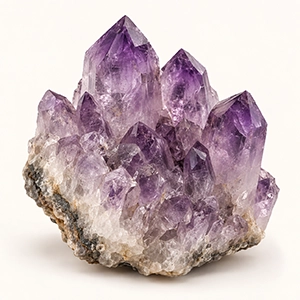
Purple quartz, once a stone of sobriety, linked today with calm and clarity.
 Apache Tear
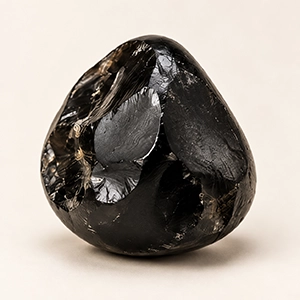
Small obsidian pebbles from Arizona perlite, linked today with grief and release.
 Black Obsidian
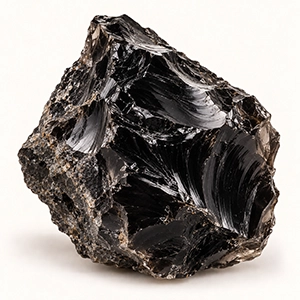
Natural volcanic glass, once blades and mirrors, linked today with grounding.
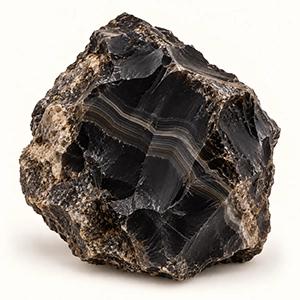 Black Onyx
Black chalcedony of Roman intaglios and cameos, linked today with boundaries.
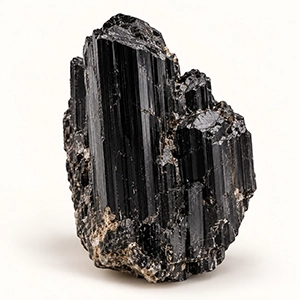 Black Tourmaline
Black schorl tourmaline, a record of the rocks it grew in, linked today with protection.
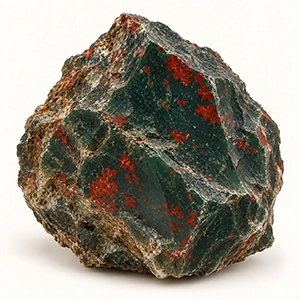 Bloodstone
Green stone flecked with red, the heliotrope of Rome, linked today with courage.
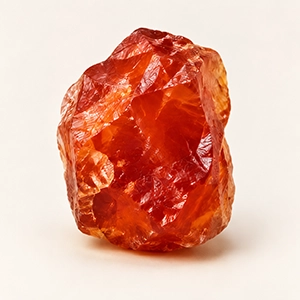 Carnelian
Orange-red chalcedony, carved since the Indus Valley, linked today with vitality.
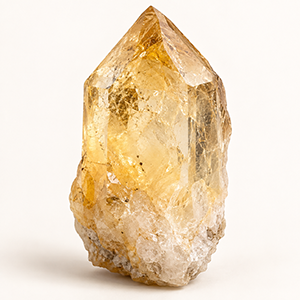 Citrine
Golden quartz, often heated amethyst, linked today with confidence and abundance.
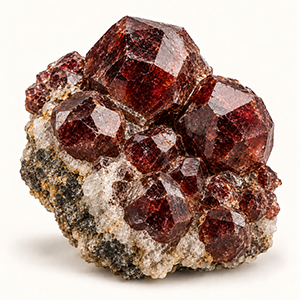 Garnet
A family of deep red gems, worn since ancient Egypt, linked today with vitality.
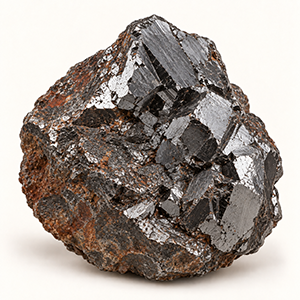 Hematite
Metallic iron mineral, once red ochre and pigment, linked today with grounding.
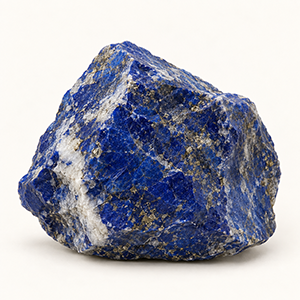 Lapis Lazuli
Deep blue stone from Afghanistan, once ground into the costliest blue in art.
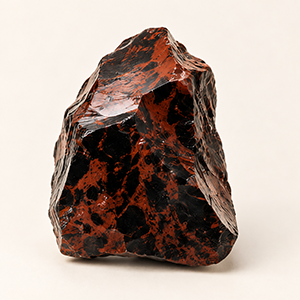 Mahogany Obsidian
Black and red-brown volcanic glass, once mirrors, linked today with resilience.
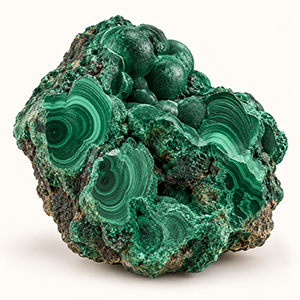 Malachite
Banded green copper mineral, once eye paint and pigment, linked today with change.
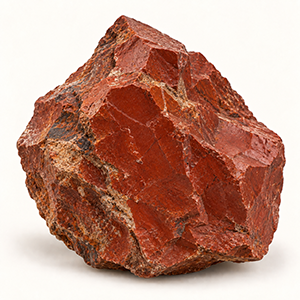 Red Jasper
Opaque red stone of Egyptian amulets and seals, linked today with endurance.
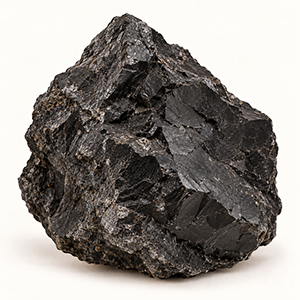 Shungite
Ancient carbon-rich rock from Karelia, linked today with protection and clearing.
 Smoky Quartz
Smoky brown quartz, Scotland’s cairngorm, linked today with gentle grounding.
 Turquoise
Sky-blue copper mineral, treasured from Egypt to Persia, linked today with protection.