Meaning, symbolism, healing traditions, uses and care
Carnelian
Carnelian is the warm orange-red variety of chalcedony, a fine-grained form of quartz. In contemporary crystal practice it is the stone of vitality and creative movement, connected with the Sacral center.
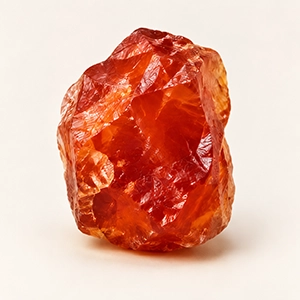
Its warmth was noticed long before anyone called it a Sacral stone. In ancient Egypt its orange-red color resembled blood, and it was understood to bring power and energy to the amulets made from it.
At a glance
- Color
- Yellow-orange, orange, reddish orange and reddish brown
- Mineral
- Chalcedony, a microcrystalline variety of quartz (SiO₂)
- Hardness
- Approximately 6.5 to 7 on the Mohs scale
- Appearance
- Translucent to opaque
- Important sources
- India, Brazil, Uruguay and other regions
- Energy center
- Sacral, with some traditions also connecting deeper red material with the Root
Unlike the large visible crystals of amethyst or clear quartz, carnelian is built from extremely fine intergrowths of quartz, which gives it its smooth, dense look. Iron compounds bring the warm color, and translucence can make a piece seem to hold light. Heat deepens that color, and people have been heating carnelian for a very long time. Heated carnelian is still carnelian.
What carnelian represents today
In contemporary crystal and metaphysical traditions, carnelian is associated with vitality, creativity, motivation, courage and sensuality, understood broadly as being present through the senses and the body. Its character is warm and activating rather than quiet or inward. Where amethyst is linked with slowing down, carnelian is linked with beginning to move.
Its confidence is the willingness to start: to experiment, to try, to move before everything feels perfect. Through its Sacral link it is also connected with desire and sexual energy. These are energetic associations, not a treatment for sexual or reproductive health.
A short history
By the third millennium BCE, craftspeople in the Indus Valley were making long, carefully drilled carnelian beads, some decorated with pale etched patterns. Those beads traveled through ancient trade networks and have been found in Mesopotamia, Iran and Syria. In Egypt, carnelian was shaped into hand and foot amulets, linked with protecting the limbs and possibly with dexterity or speed.
A stone of early technology
The British Museum describes how the etched beads were made: an alkaline substance was applied to the stone, then heated until pale patterns became fixed into its surface. Today archaeologists use where these beads turned up to reconstruct ancient exchange networks between South Asia, Mesopotamia and other regions. Carnelian belongs to the history of craft and long-distance trade as much as to the history of jewelry.
What people often misunderstand about carnelian
The common shortcut is: no motivation means carnelian. “I feel stuck” and “I can’t create” seem to call for an activating stone. But the same lack of movement can come from opposite places.
One person genuinely needs more momentum. Another looks unmotivated because they are exhausted and need restoration. One needs more creative freedom. Another has plenty of ideas but is held back by fear, uncertainty or a lack of direction. And someone who is already highly stimulated may simply need enough stillness to know where to point their energy.
The surface looks the same. The support that fits it may not be.
Sometimes more fire helps. Sometimes the fire is already there and needs direction. And sometimes what is needed is permission to rest before lighting it again.
When carnelian may not be what you need
If you are already constantly moving and pushing yourself, and slowing down is the hard part: rest or grounding may serve you better than more activation.
If you have too many ideas and cannot decide which one matters: more creative stimulation may not help, and the missing quality may be clarity or focus.
If you are forcing yourself into motivation while the deeper issue is exhaustion: pushing harder can easily be mistaken for progress.
If your relationship with desire feels chaotic or impulsive: the helpful direction may be getting grounded in what you genuinely value, not wanting more.
Carnelian is not too strong or wrong for anyone. Its warmth is one kind of support, and not always the one this moment is asking for.
The My Crystal Code view
Warmth is not always what is missing
Carnelian’s meaning is vivid, and its warmth is easy to want. But that meaning describes the stone, not you. Knowing what a crystal traditionally represents is not the same as knowing whether it is the right crystal for you right now. My Crystal Code looks at the whole person before suggesting any support: the person comes first, the crystal second.
How people use carnelian
- Sacral meditation: Place a polished stone near the lower abdomen during meditation or a crystal layout.
- Creative spaces: Keep it near a sketchbook, laptop, studio or wherever creative work happens.
- Movement: Keep it close during dance, exercise, yoga or other practices that bring awareness back to the body.
- Beginnings: Hold it or keep it nearby when starting something you have repeatedly postponed.
- Jewelry: Wear it as a pendant, bracelet, ring or earrings.
Caring for carnelian
- Cleaning: Warm water, mild soap and a soft cloth or brush are generally suitable.
- Heat: Avoid unnecessary high heat, especially with valuable pieces, since heat can change its color.
- Temperature changes: Avoid sudden extreme temperature changes.
- Chemicals: Keep carnelian jewelry away from harsh household chemicals.
- Ultrasonic and steam: When the stone’s treatment history or condition is unknown, simple hand cleaning is the safest option.
- Storage: Keep it apart from harder gemstones that could scratch it.
Questions people often ask
Why is carnelian orange?
Its yellow-orange to reddish color comes from iron within the chalcedony.
Is carnelian heat treated?
Often. Heat can intensify its orange and red tones, and people have heated carnelian for a very long time. It remains chalcedony: the color is enhanced, not replaced.
Is carnelian the same as red jasper?
No. Both belong to the broader quartz family, but carnelian is typically translucent to semi-opaque chalcedony, while red jasper is generally opaque.
Can carnelian go in water?
Yes, for ordinary cleaning. Warm water and mild soap are generally suitable; extended soaking is unnecessary.
Is carnelian the right crystal for me?
It may be. Its meaning tells you what the stone represents; whether more warmth and movement is the support you need right now is a personal question, and that is where My Crystal Code begins.
Discover which crystals fit you right now
Carnelian’s meaning tells you what kind of fire it carries. The next question is whether fire is what you need right now.
Start your readingSources
- The Metropolitan Museum of Art: Ancient Egyptian carnelian amulets and the relationship between their red-orange color, blood, power and energy.
- British Museum: Indus Valley etched carnelian beads, ancient production techniques and long-distance trade.
- Gemological and mineralogical references: Carnelian as iron-colored chalcedony, its physical properties, treatments and practical care.
More in the Crystal Library
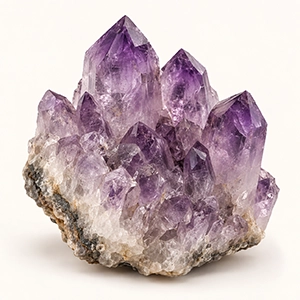 Amethyst
Purple quartz, once a stone of sobriety, linked today with calm and clarity.
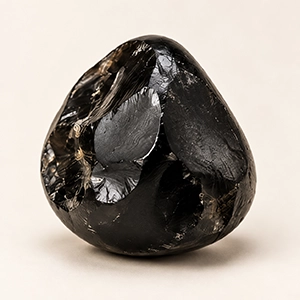 Apache Tear
Small obsidian pebbles from Arizona perlite, linked today with grief and release.
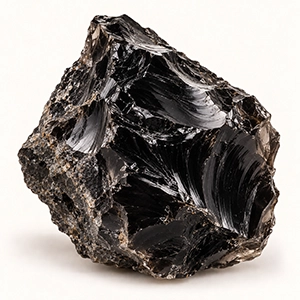 Black Obsidian
Natural volcanic glass, once blades and mirrors, linked today with grounding.
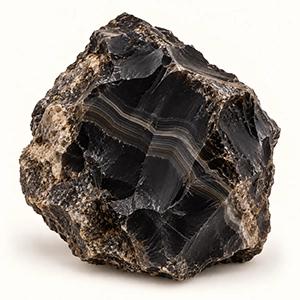 Black Onyx
Black chalcedony of Roman intaglios and cameos, linked today with boundaries.
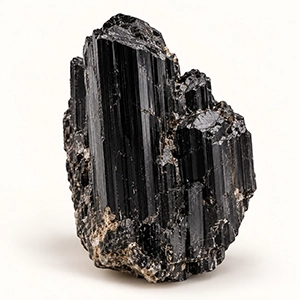 Black Tourmaline
Black schorl tourmaline, a record of the rocks it grew in, linked today with protection.
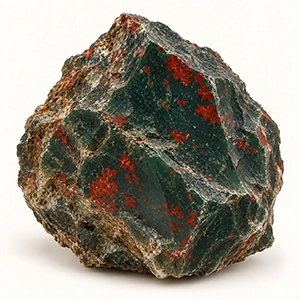 Bloodstone
Green stone flecked with red, the heliotrope of Rome, linked today with courage.
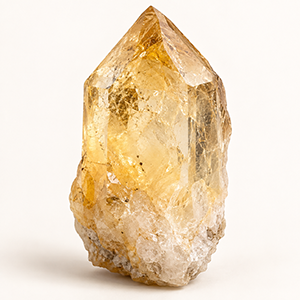 Citrine
Golden quartz, often heated amethyst, linked today with confidence and abundance.
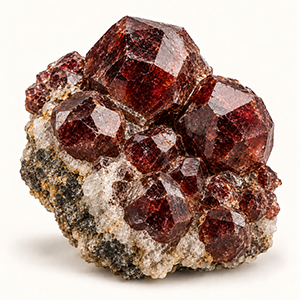 Garnet
A family of deep red gems, worn since ancient Egypt, linked today with vitality.
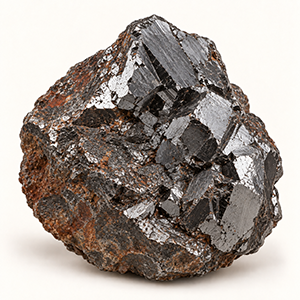 Hematite
Metallic iron mineral, once red ochre and pigment, linked today with grounding.
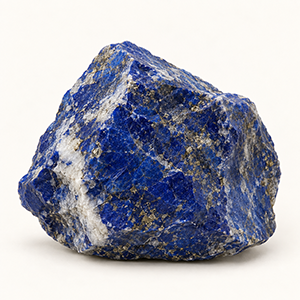 Lapis Lazuli
Deep blue stone from Afghanistan, once ground into the costliest blue in art.
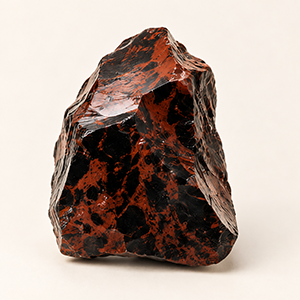 Mahogany Obsidian
Black and red-brown volcanic glass, once mirrors, linked today with resilience.
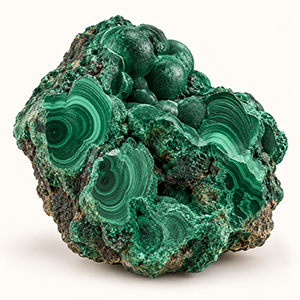 Malachite
Banded green copper mineral, once eye paint and pigment, linked today with change.
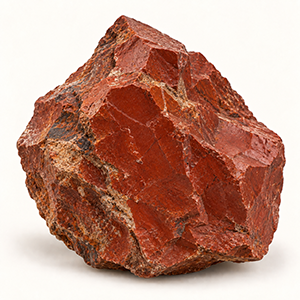 Red Jasper
Opaque red stone of Egyptian amulets and seals, linked today with endurance.
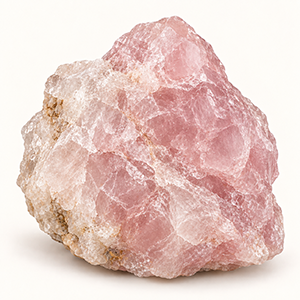 Rose Quartz
Pink quartz, worn for thousands of years, linked today with love and the Heart.
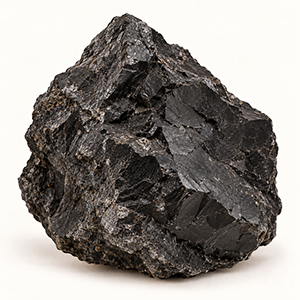 Shungite
Ancient carbon-rich rock from Karelia, linked today with protection and clearing.
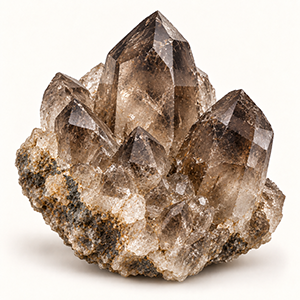 Smoky Quartz
Smoky brown quartz, Scotland’s cairngorm, linked today with gentle grounding.
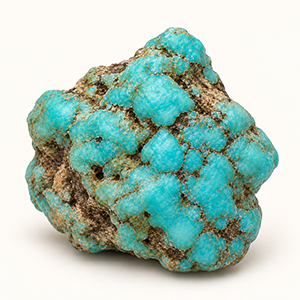 Turquoise
Sky-blue copper mineral, treasured from Egypt to Persia, linked today with protection.