Meaning, symbolism, healing traditions, uses and care
Amethyst
Amethyst is the violet variety of quartz, and one of the most recognized crystals in the world. In contemporary crystal practice it is the stone of calm and clarity, connected with the Third Eye and Crown.
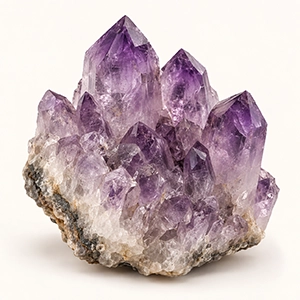
Its oldest meaning points the same way. The Greek name amethystos means “not intoxicated”: for centuries the stone stood for staying clear-headed rather than being carried away.
At a glance
- Color
- Pale lilac to deep violet and royal purple
- Mineral
- Quartz (SiO₂)
- Hardness
- 7 on the Mohs scale
- Birthstone
- February
- Common sources
- Brazil, Uruguay, Zambia and other parts of Africa and South America
- Energy centers
- Third Eye and Crown
Its purple comes from iron in the quartz, changed by natural radiation as the crystal formed, which is why one stone can shift from pale lilac to deep violet. Heated, it turns yellow to orange: most citrine sold today began as amethyst.
What amethyst represents today
In contemporary crystal and metaphysical traditions, amethyst is associated with calm, clarity and intuition, and with a kind of protection that comes from staying centered rather than shutting things out. People keep it close during meditation, reflection and evening rituals, and beside the bed when they pay attention to their dreams.
A short history
Ancient Egyptians carved amethyst into beads, amulets and scarabs; The Met holds one from around 1981 to 1950 BCE. And until huge deposits were found in Brazil in the 19th century, fine amethyst was valued alongside ruby, sapphire and emerald. It still appears in crown jewels and bishops’ rings.
What people often misunderstand about amethyst
The common shortcut is: a busy mind needs amethyst. But a mind can feel busy for opposite reasons.
For someone overstimulated, more quiet may be exactly right. For someone who already lives in their head, reflecting and analyzing all day, more inwardness can deepen the very loop they want to leave. What is missing may be movement, grounding or action, not more stillness.
Clarity is not always found by going further inward. Sometimes it arrives when you finally act on what you already know.
When amethyst may not be what you need
If most of your energy already goes into thought, and what is missing is your body, movement or the practical world.
If you know the next step and keep postponing it: the clarity may already be there.
If your inner life is rich but everyday life needs structure, boundaries or confidence.
None of this makes amethyst a wrong stone. It means its character may not be the support this moment calls for.
The My Crystal Code view
A meaning is not a recommendation
Amethyst’s meaning is clear and well loved, but it describes the stone, not you. Knowing what a crystal traditionally represents is not the same as knowing whether it is the right crystal for you right now. My Crystal Code looks at the whole person before suggesting any support, never a single feeling or keyword.
How people use amethyst
- Meditation: Hold a polished stone or sit near a cluster during quiet contemplation.
- Evenings: Keep it beside the bed, or near a journal when paying attention to dreams.
- Reflection: Hold it while journaling when the intention is clarity.
- Jewelry: Wear it as a pendant, ring, earrings or bracelet.
- Personal spaces: Place a cluster on a desk, shelf or meditation corner.
Caring for amethyst
- Cleaning: Warm water, mild soap and a soft cloth or brush.
- Light: Avoid long exposure to strong direct sunlight, which can fade some amethyst.
- Heat: Avoid high heat and sudden temperature changes, which can change its color or cause fractures.
- Steam: Steam cleaning is not recommended.
- Ultrasonic cleaning: Usually fine for untreated stones in good condition; avoid it for stones with fractures, fillings, dye or unknown treatment.
- Storage: Store it apart from harder gemstones that could scratch it.
Questions people often ask
Why is it called amethyst?
From the ancient Greek amethystos, “not intoxicated”. Greek and Roman traditions linked the stone with sobriety and staying clear-headed.
Can amethyst go in water?
Yes, for ordinary cleaning. Warm water and mild soap are fine; long soaking is unnecessary.
Can amethyst stay in sunlight?
Briefly, yes. Long, intense sunlight can fade some amethyst, so a shaded shelf is the safer home.
Is my citrine really amethyst?
Often, yes. Most citrine on the market is amethyst that has been heated until it turns yellow or orange. It is still quartz.
Is amethyst the right crystal for me?
It may be. Its meaning tells you what the stone represents; whether that is the support you need right now is a personal question, and that is where My Crystal Code begins.
Discover which crystals fit you right now
Crystal meanings are a beginning. The next question is which of them is actually relevant to you.
Start your readingSources
- Gemological Institute of America (GIA): Amethyst Gem Encyclopedia, History & Lore, Description and Care resources.
- The Metropolitan Museum of Art: Ancient Egyptian amethyst scarabs and amulets.
- U.S. Geological Survey and NIST: Quartz mineral properties, piezoelectric behavior and modern frequency-control applications.
More in the Crystal Library
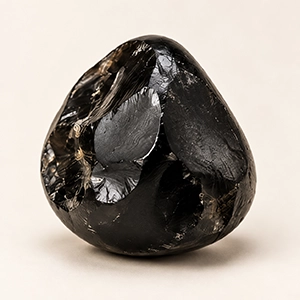 Apache Tear
Small obsidian pebbles from Arizona perlite, linked today with grief and release.
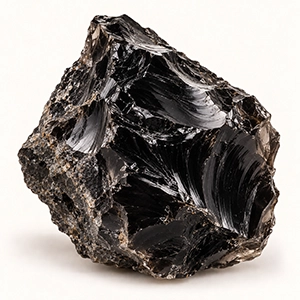 Black Obsidian
Natural volcanic glass, once blades and mirrors, linked today with grounding.
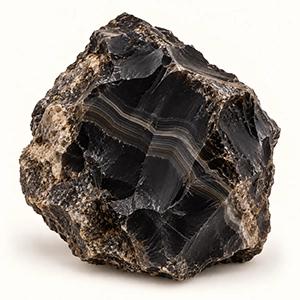 Black Onyx
Black chalcedony of Roman intaglios and cameos, linked today with boundaries.
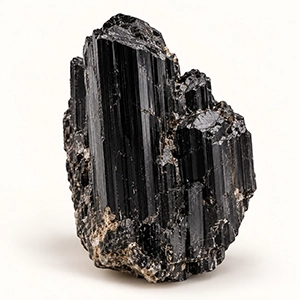 Black Tourmaline
Black schorl tourmaline, a record of the rocks it grew in, linked today with protection.
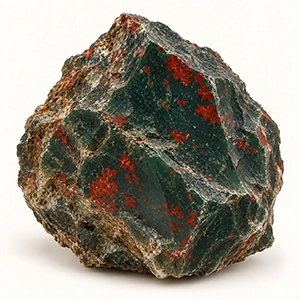 Bloodstone
Green stone flecked with red, the heliotrope of Rome, linked today with courage.
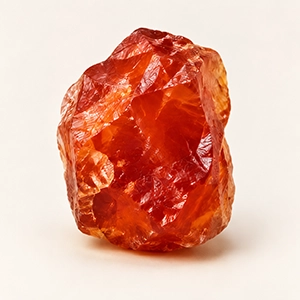 Carnelian
Orange-red chalcedony, carved since the Indus Valley, linked today with vitality.
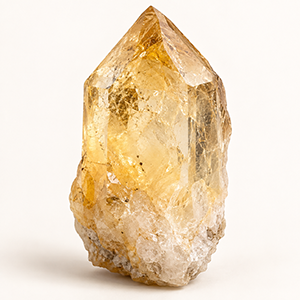 Citrine
Golden quartz, often heated amethyst, linked today with confidence and abundance.
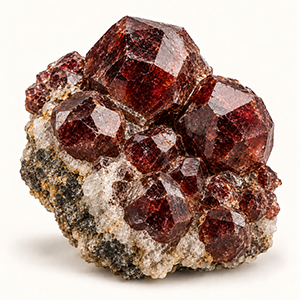 Garnet
A family of deep red gems, worn since ancient Egypt, linked today with vitality.
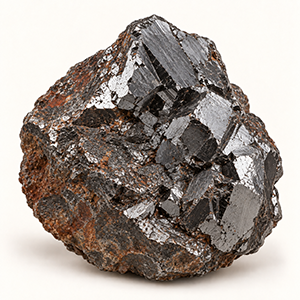 Hematite
Metallic iron mineral, once red ochre and pigment, linked today with grounding.
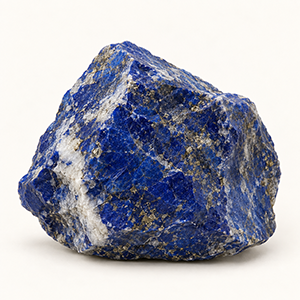 Lapis Lazuli
Deep blue stone from Afghanistan, once ground into the costliest blue in art.
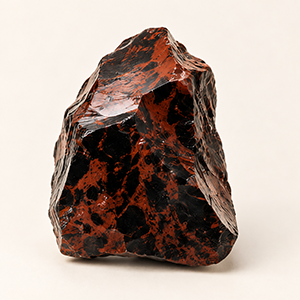 Mahogany Obsidian
Black and red-brown volcanic glass, once mirrors, linked today with resilience.
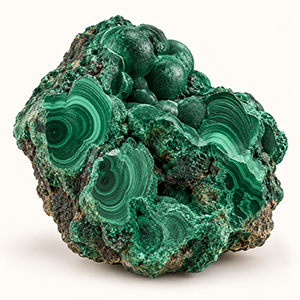 Malachite
Banded green copper mineral, once eye paint and pigment, linked today with change.
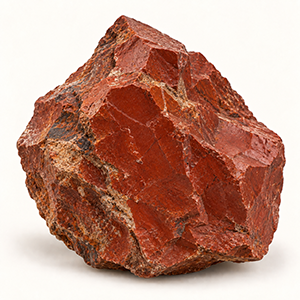 Red Jasper
Opaque red stone of Egyptian amulets and seals, linked today with endurance.
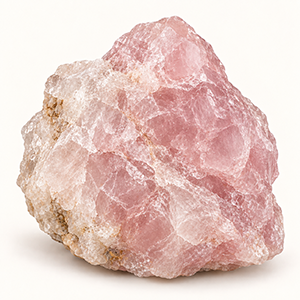 Rose Quartz
Pink quartz, worn for thousands of years, linked today with love and the Heart.
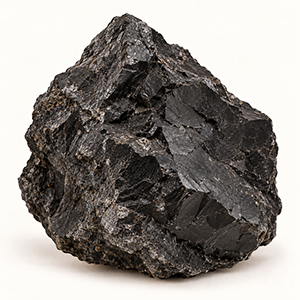 Shungite
Ancient carbon-rich rock from Karelia, linked today with protection and clearing.
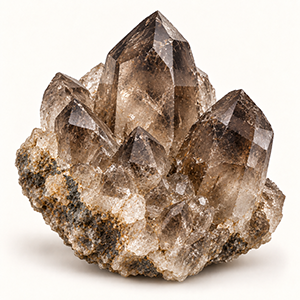 Smoky Quartz
Smoky brown quartz, Scotland’s cairngorm, linked today with gentle grounding.
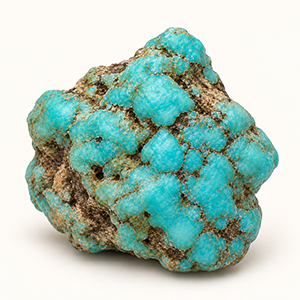 Turquoise
Sky-blue copper mineral, treasured from Egypt to Persia, linked today with protection.