Meaning, symbolism, healing traditions, uses and care
Garnet
Garnet is not one red stone but a family of closely related minerals, found in red, orange, yellow, green, purple and even rare color-changing varieties. In contemporary crystal practice, the deep red garnets are the stone of sustained life force, connected with the Root.
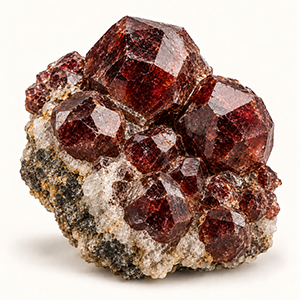
Its story is one of the longest in jewelry. GIA records a red garnet bead necklace found in an Egyptian grave that is more than five thousand years old: a stone valued enough to accompany people into burial.
At a glance
- Color
- Most famously deep red, but also orange, yellow, green, purple and rare blue or color-changing varieties
- Mineral
- Garnet mineral group
- Common red species
- Almandine and pyrope, often occurring as mixtures
- Hardness
- Approximately 6.5 to 7.5 on the Mohs scale, depending on species
- Crystal system
- Isometric
- Birthstone
- January
- Energy center
- Root for red garnets, with some traditions also connecting them with lower-body vitality and passion
All garnets share the same basic crystal structure, but their chemistry varies. Almandine contains iron, pyrope contains magnesium, and many red stones fall between the two, described as pyrope-almandine. The name refers to a structural family; color and chemistry tell you which part of it you are holding. The family even includes vivid green tsavorite and demantoid.
What garnet represents today
In contemporary crystal and metaphysical traditions, red garnet is associated with vitality, grounding, courage, passion and commitment. Its energy is described as warm and substantial: less the quick spark of ignition, more the work of maintaining the flame. Its grounding is warm too: less about becoming still, more about staying engaged with life.
Some traditions also connect it symbolically with blood and physical energy because of its deep red color. That link is symbolic only: garnet should not be considered a treatment for any medical concern.
A short history
Romans carved garnet intaglios for signet rings that were pressed into wax to secure or authenticate documents: a stone that could leave a person’s mark. Centuries later, pyrope from Bohemia, now part of the Czech Republic, supported a jewelry industry that became especially successful in the nineteenth century, setting many small red stones close together into surfaces of deep, glowing color.
A record of the earth, and a cutting tool
Garnet is especially common in metamorphic rocks, and because it grows while rocks change, its chemistry can preserve information about the pressures and temperatures deep in Earth’s crust. Not all garnet is gem quality. Its hardness and angular fracture make crushed garnet a useful abrasive: in waterjet cutting, its particles ride extremely high-pressure water to cut metal, stone and ceramic. One garnet is faceted into jewelry; its relative ends up in a cutting machine.
What people often misunderstand about garnet
The common shortcut is: low energy needs garnet. But “I need more energy” can come from opposite places.
One person has genuinely lost touch with vitality and may welcome something warm and embodied. Another is depleted because they have been spending too much energy for too long. For the second person, a stone of endurance can sound like one more instruction to keep going, when what is missing may be rest.
Commitment works the same way. One person needs courage to stay with something that matters. Another is holding on mainly because stopping would feel like failure.
There is a real difference between lacking energy and needing permission to conserve it. Between commitment and overextension. Between passion and pressure.
When garnet may not be what you need
If you already push yourself long after your energy is depleted: restoration may matter more than another push toward persistence.
If you stay committed to situations long after they have stopped being healthy or meaningful, “more commitment” may reinforce the wrong direction.
If your life already feels intense, passionate or demanding, a quieter, more stabilizing quality may serve you better than more fire.
If most of your energy goes into survival, productivity or responsibility, the missing quality may be receiving, emotional openness or creativity, not more Root.
None of this makes garnet the wrong stone. Its warm, steady character can be deeply supportive; the question is whether more fuel is what this season of your life is asking for.
The My Crystal Code view
More fuel is not always the answer
Garnet stands for keeping the flame alive, and that is a good thing to want. Knowing what a crystal traditionally represents is not the same as knowing whether it is the right crystal for you right now. My Crystal Code looks at the whole person before suggesting any support, because the same tiredness can ask for warmth or for rest.
How people use garnet
- Root meditation: Place a polished red garnet near the lower body or feet during meditation or a crystal layout.
- Long-term goals: Keep it nearby when something needs sustained effort rather than a short burst of motivation.
- Movement: Carry it during walking or movement practices centered on embodiment.
- Commitments: Hold it while reflecting on relationships, goals or responsibilities you consciously choose to sustain.
- Jewelry: Wear it as a ring, pendant, bracelet or earrings.
Caring for garnet
- Cleaning: Warm water, mild soap and gentle brushing are the safest method.
- Impact: Protect it from hard blows; hardness is about 6.5 to 7.5, and toughness ranges from fair to good.
- Ultrasonic cleaning: Usually suitable for sound, untreated stones without fractures.
- Steam: Steam cleaning is not recommended.
- Chemicals: Generally stable to light and normal chemicals, but garnet can be attacked by hydrofluoric acid.
- Treatments: Garnets are not commonly treated, although fracture filling is occasionally encountered.
- Storage: Keep garnet jewelry separate from harder stones that may scratch it.
Questions people often ask
Is garnet always red?
No. Garnet is a mineral group found in many colors, including orange, yellow, green, purple and rare blue or color-changing varieties. Red almandine and pyrope are simply the best known.
Where does the name garnet come from?
It is commonly traced to the medieval Latin granatus, linked with the pomegranate, because deep red garnets resemble pomegranate seeds.
Can garnet go in water?
Yes, for cleaning. Warm water, mild soap and gentle brushing are the safest method.
Can garnet stay in sunlight?
Yes. Garnets are generally stable to light.
Is garnet the right crystal for me?
It may be. Its meaning tells you what the stone represents; whether warmth and endurance are what you need right now is a personal question, and that is where My Crystal Code begins.
Discover which crystals fit you right now
Crystal meanings are a starting point. The more useful question is whether a stone like garnet speaks to where you are right now.
Start your readingSources
- Gemological Institute of America (GIA): Garnet Description, History & Lore, January Birthstone and Care & Cleaning resources.
- Gemological research: Garnet mineral-group chemistry, species and color diversity.
- Geological references: Garnet formation in metamorphic rocks and industrial use as abrasive, waterjet-cutting and filtration material.
More in the Crystal Library
 Amethyst
Purple quartz, once a stone of sobriety, linked today with calm and clarity.
 Apache Tear
Small obsidian pebbles from Arizona perlite, linked today with grief and release.
 Black Obsidian
Natural volcanic glass, once blades and mirrors, linked today with grounding.
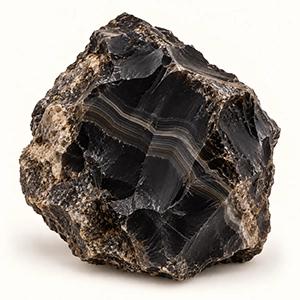 Black Onyx
Black chalcedony of Roman intaglios and cameos, linked today with boundaries.
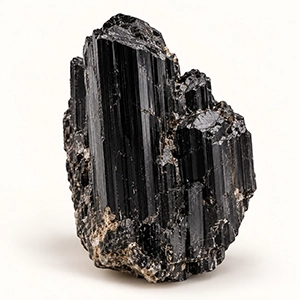 Black Tourmaline
Black schorl tourmaline, a record of the rocks it grew in, linked today with protection.
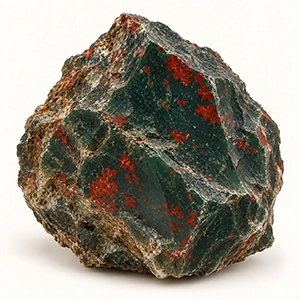 Bloodstone
Green stone flecked with red, the heliotrope of Rome, linked today with courage.
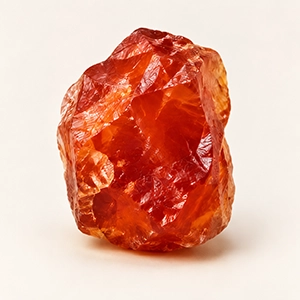 Carnelian
Orange-red chalcedony, carved since the Indus Valley, linked today with vitality.
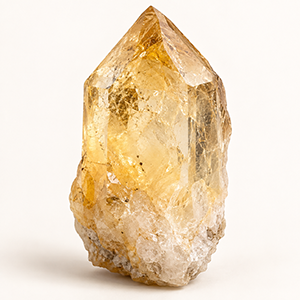 Citrine
Golden quartz, often heated amethyst, linked today with confidence and abundance.
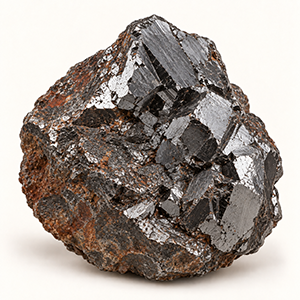 Hematite
Metallic iron mineral, once red ochre and pigment, linked today with grounding.
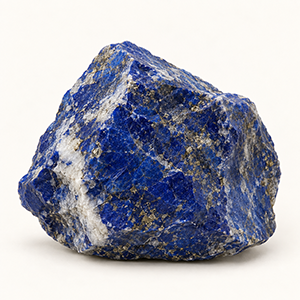 Lapis Lazuli
Deep blue stone from Afghanistan, once ground into the costliest blue in art.
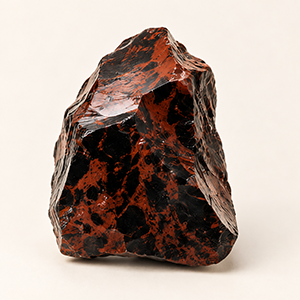 Mahogany Obsidian
Black and red-brown volcanic glass, once mirrors, linked today with resilience.
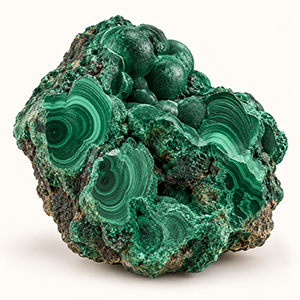 Malachite
Banded green copper mineral, once eye paint and pigment, linked today with change.
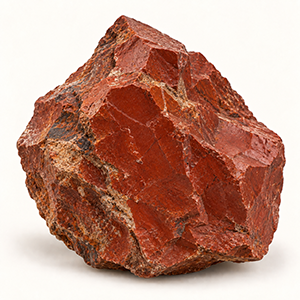 Red Jasper
Opaque red stone of Egyptian amulets and seals, linked today with endurance.
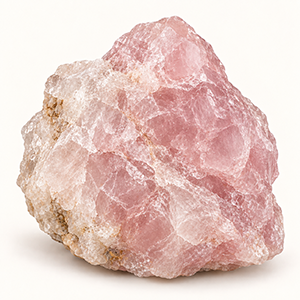 Rose Quartz
Pink quartz, worn for thousands of years, linked today with love and the Heart.
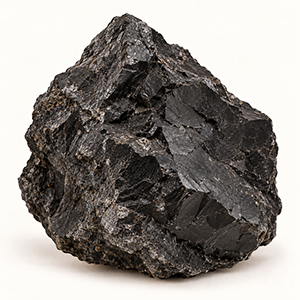 Shungite
Ancient carbon-rich rock from Karelia, linked today with protection and clearing.
 Smoky Quartz
Smoky brown quartz, Scotland’s cairngorm, linked today with gentle grounding.
 Turquoise
Sky-blue copper mineral, treasured from Egypt to Persia, linked today with protection.