Meaning, symbolism, healing traditions, uses and care
Citrine
Citrine is the golden variety of quartz, its color running from pale yellow and champagne through honey and amber to a deep reddish orange. In contemporary crystal practice it is the stone of confidence and abundance, connected with the Solar Plexus.
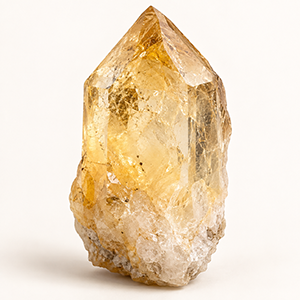
Its physical story holds a surprise. Natural citrine is relatively rare: much of the citrine sold today began as amethyst and turned golden through controlled heat. Where amethyst draws attention inward, citrine is the stone that moves outward.
At a glance
- Color
- Pale yellow to golden yellow, orange and reddish or brownish orange
- Mineral
- Quartz (SiO₂)
- Hardness
- 7 on the Mohs scale
- Birthstone
- November, alongside topaz
- Important sources
- Natural citrine occurs in several regions; Brazil is particularly important in the commercial quartz market
- Availability
- Widely available, although naturally colored unheated citrine is considerably rarer
- Energy center
- Solar Plexus
Its color is related to iron within the quartz. Heating certain amethyst shifts the conditions that produce color, turning violet into yellow, gold, orange or reddish brown while the stone remains quartz. That is why so many dramatic orange citrine clusters look like amethyst geodes: they often began as one.
What citrine represents today
In contemporary crystal and metaphysical traditions, citrine is associated with confidence, personal power, abundance and creativity, and with the moment an idea moves from intention into the material world. It is one of the best-known Solar Plexus stones, linked with the inner sense of “I can”: I can choose, act and be seen. Sometimes called a merchant’s stone, it is often kept in offices, shops and on desks.
A short history
Before modern mineralogy, gemstones were named largely by color, and citrine and yellow topaz were easy to confuse, so old descriptions of “topaz” cannot always be carried over to citrine. What is well documented is its place in jewelry: it appeared in Victorian pieces and became popular in colorful Scottish jewelry, where its warm gold suited large brooches. Its identity as an abundance stone came much later.
What people often misunderstand about citrine
The common shortcut is: I want abundance, so I need citrine. But the same wish can come from opposite places.
One person needs the courage to take a visible step. Another is already working constantly, pushing as hard as they can. For the first, citrine’s push toward action may be exactly right. For the second, more push is the one thing they have plenty of.
Abundance in this tradition was never only about doing more. It also includes time, support, recognition and the ability to receive. Someone chasing every opportunity out of scarcity may be missing the ease to choose, not the drive to act.
Citrine’s confidence is about participation, not perfection: willingness to move before certainty arrives. That is a gift when you are holding back. It is less useful when what you lack is rest.
When citrine may not be what you need
If you already measure yourself through achievement, and what is missing is rest or restoration rather than another push.
If you have confidence and motivation but keep moving in too many directions: the missing piece may be clarity, not activation.
If your relationship with money or growth is ruled by fear, and a sense of safety needs to come before expansion.
If you give, work and create constantly but struggle to accept help or recognition, so the part of abundance you need is receiving.
None of this makes citrine the wrong crystal. It shows why “abundance stone” is not enough to go on when the choice is personal.
The My Crystal Code view
A keyword is not a match
Citrine’s meaning is bright and easy to love, which makes it easy to reach for whenever the goal is growth. Knowing what a crystal traditionally represents is not the same as knowing whether it is the right crystal for you right now. My Crystal Code looks at the whole person before suggesting any support, so the stone follows the need, not the goal.
How people use citrine
- Solar Plexus meditation: Place a polished stone near the upper abdomen during meditation or a crystal layout.
- Workspaces: Keep it on a desk, in a studio or in a shop when the intention involves creativity or action.
- Before a big moment: Hold it while preparing for an important conversation, presentation or decision.
- Intention-setting: Include it in practices centered on opportunity, prosperity or receiving.
- Jewelry: Wear it as a ring, pendant, bracelet or earrings.
Caring for citrine
- Cleaning: Warm water, mild soap and a soft cloth or brush.
- Ultrasonic cleaning: Usually safe, unless the stone has been dyed, fracture-filled or otherwise treated in a way that makes it inappropriate.
- Steam: Steam cleaning is not recommended.
- Heat: Avoid high heat and sudden temperature changes, which can fracture citrine.
- Light: Prolonged exposure to intense light can fade some citrine.
- Chemicals: Avoid strong chemicals, including hydrofluoric acid and aggressive alkaline solutions.
- Storage: Store it apart from harder gemstones that could scratch it.
Questions people often ask
Why is it called citrine?
The name is commonly connected with the French citron, meaning lemon, after the stone’s yellow color.
Is heat-treated citrine fake?
Not in the way glass or plastic is. Heated amethyst is still quartz; only its color has been changed. Natural citrine tends toward paler, smoky or brownish yellow, but color alone cannot prove origin. Professional testing is more reliable.
Can citrine go in water?
Yes, for ordinary cleaning. Warm water and mild soap are fine; long soaking is unnecessary.
Can citrine stay in sunlight?
Normal exposure is generally fine. Prolonged, intense light can fade the color of some citrine.
What is ametrine?
Quartz in which purple amethyst and yellow citrine color zones appear in the same crystal. Natural commercial ametrine is particularly associated with the Anahí mine in Bolivia, and one stone shows both sides of the relationship.
Is citrine the right crystal for me?
It may be. Its meaning tells you what the stone represents; whether more of that is the support you need right now is a personal question, and that is where My Crystal Code begins.
Discover which crystals fit you right now
Citrine’s meaning points outward, toward action. The better first question is whether more of that is what you need right now.
Start your readingSources
- Gemological Institute of America (GIA): Citrine Gem Encyclopedia, Description, History & Lore, Treatments and Care resources.
- Gemological references: Natural and heat-treated citrine, ametrine and the historical distinction between citrine and topaz.
- NIST and quartz research: Piezoelectric quartz, resonance and modern frequency-control applications.
More in the Crystal Library
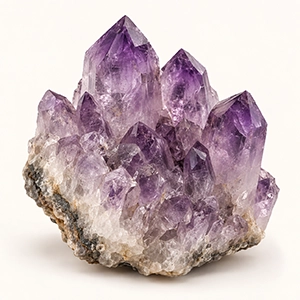 Amethyst
Purple quartz, once a stone of sobriety, linked today with calm and clarity.
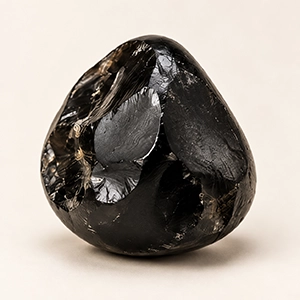 Apache Tear
Small obsidian pebbles from Arizona perlite, linked today with grief and release.
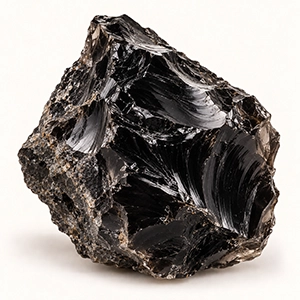 Black Obsidian
Natural volcanic glass, once blades and mirrors, linked today with grounding.
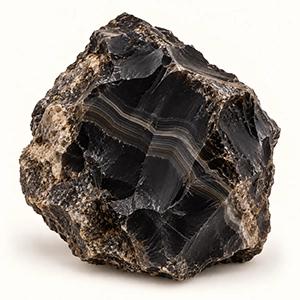 Black Onyx
Black chalcedony of Roman intaglios and cameos, linked today with boundaries.
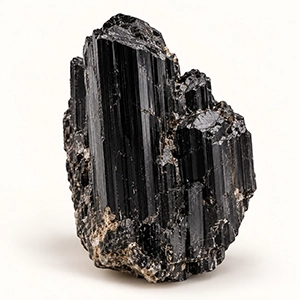 Black Tourmaline
Black schorl tourmaline, a record of the rocks it grew in, linked today with protection.
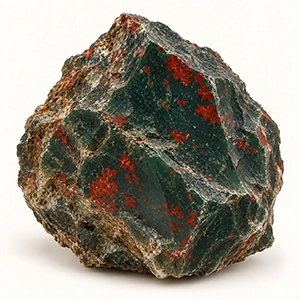 Bloodstone
Green stone flecked with red, the heliotrope of Rome, linked today with courage.
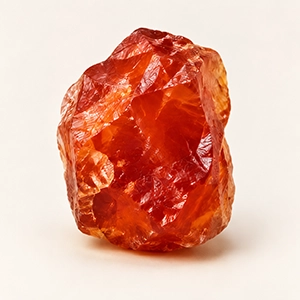 Carnelian
Orange-red chalcedony, carved since the Indus Valley, linked today with vitality.
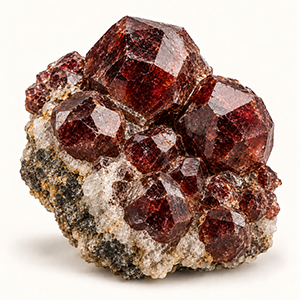 Garnet
A family of deep red gems, worn since ancient Egypt, linked today with vitality.
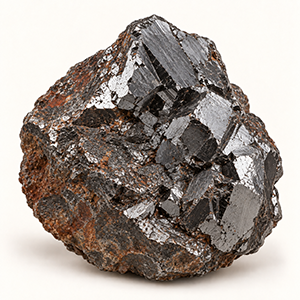 Hematite
Metallic iron mineral, once red ochre and pigment, linked today with grounding.
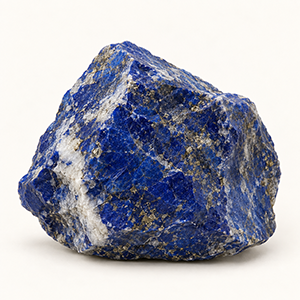 Lapis Lazuli
Deep blue stone from Afghanistan, once ground into the costliest blue in art.
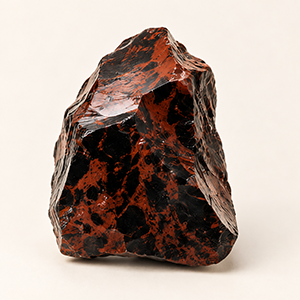 Mahogany Obsidian
Black and red-brown volcanic glass, once mirrors, linked today with resilience.
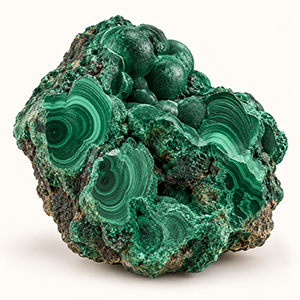 Malachite
Banded green copper mineral, once eye paint and pigment, linked today with change.
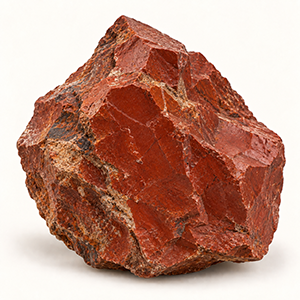 Red Jasper
Opaque red stone of Egyptian amulets and seals, linked today with endurance.
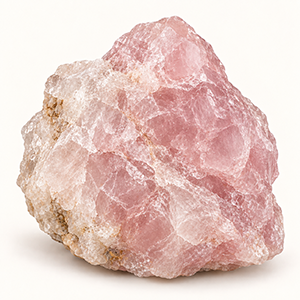 Rose Quartz
Pink quartz, worn for thousands of years, linked today with love and the Heart.
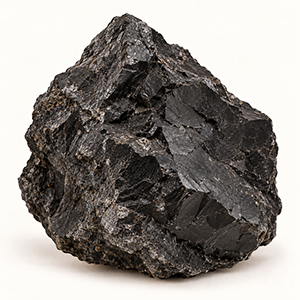 Shungite
Ancient carbon-rich rock from Karelia, linked today with protection and clearing.
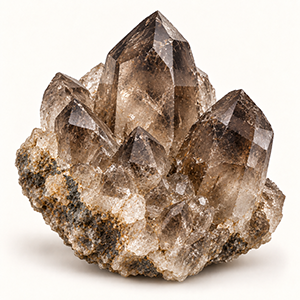 Smoky Quartz
Smoky brown quartz, Scotland’s cairngorm, linked today with gentle grounding.
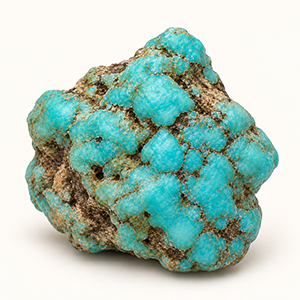 Turquoise
Sky-blue copper mineral, treasured from Egypt to Persia, linked today with protection.