Meaning, symbolism, healing traditions, uses and care
Lapis Lazuli
Lapis lazuli is a deep blue stone, often crossed by white calcite and scattered with small golden flecks of pyrite, like points of light in a night sky. In contemporary crystal practice it is the stone of truth and expression, connected with the Throat and Third Eye.
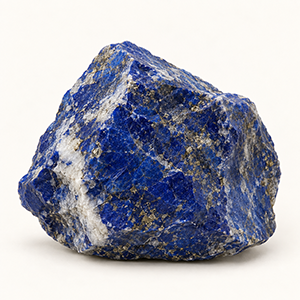
Its value is far older than its modern meaning. For more than six thousand years people carried it across mountains and deserts, and eventually ground it into one of the most prestigious blues in the history of art.
At a glance
- Color
- Deep royal blue to violet-blue, sometimes with white calcite and golden pyrite
- Material
- A rock composed of several minerals rather than a single mineral species
- Main components
- Lazurite, calcite and pyrite
- Hardness
- Approximately 5 to 6 on the Mohs scale
- Traditional major source
- Badakhshan, Afghanistan
- Other important sources
- Chile and the Lake Baikal region of Russia
- Energy centers
- Throat and Third Eye
Unlike most crystals in the library, lapis is technically a rock, not one mineral. Lazurite gives the blue, calcite the white, and pyrite the metallic gold-colored flecks, which are not gold. Each piece is a natural composition of all three: fine lapis is valued for strong, even blue, while large areas of white calcite generally lower its value.
What lapis lazuli represents today
In contemporary crystal and metaphysical traditions, lapis lazuli is associated with truth, wisdom, communication, intuition and inner vision. Its two centers make it a bridge: the Third Eye for seeing and understanding, the Throat for giving that understanding a voice. That voice includes listening, writing, setting a boundary or naming something that has stayed unspoken, not only talking more.
A short history
By the Bronze Age, lapis from Badakhshan was traveling thousands of kilometers west to the cities of Mesopotamia and on into Syria and Egypt, carried by people and animals through mountains and deserts. Elite burials at Ur held it in beads, seals, inlays and jewelry. Egypt had no major native source, so its lapis jewelry and amulets are also evidence of trade reaching far to the east.
The blue from beyond the sea
Ground and carefully processed, the lazurite-rich part of lapis became natural ultramarine, a name meaning a color from “beyond the sea.” It was the most expensive blue in medieval and Renaissance Western painting, so costly that artists often saved it for the most important areas, famously the robes of the Virgin Mary. Only in the nineteenth century did synthetic ultramarine make brilliant blue widely available.
What people often misunderstand about lapis lazuli
The common shortcut is: if you can’t express yourself, you need lapis. But the same struggle can come from opposite places.
One person knows exactly what they want to say and cannot get it out. Another talks constantly, because they have not yet been quiet long enough to know what they actually feel. The first may need courage. The second may need silence.
Sometimes the problem is not communication at all. A person may still not know what they want, or need firmer boundaries, and no amount of speaking will settle that.
Truth has an inward step before the outward one. Recognizing what you really think, before shaping it around what others expect, often matters more than saying it louder.
When lapis lazuli may not be what you need
If you already spend much of your time thinking, interpreting and looking for hidden meaning, and what is missing is grounding or physical presence.
If you speak easily but find it hard to pause and listen.
If you keep trying to “speak your truth” while stirred up, and what would help first is calm, compassion or clarity.
If you are already highly intuitive but struggle to turn insight into practical action.
None of this makes lapis the wrong choice. Sometimes expression needs support, and sometimes silence or everyday grounding does.
The My Crystal Code view
More expression is not always the answer
Lapis stands for truth and expression, but that does not mean more expression is what you need. Knowing what a crystal traditionally represents is not the same as knowing whether it is the right crystal for you right now. My Crystal Code looks at the whole person before suggesting any support.
How people use lapis lazuli
- Throat meditation: Place a smooth stone near the throat during quiet reflection or a crystal layout.
- Third Eye meditation: Rest it near the forehead during meditation or intuitive work.
- Before important words: Keep it nearby while preparing a conversation, presentation or piece of writing.
- Journaling: Hold it while exploring feelings that are hard to put into words.
- Jewelry: Wear it as a pendant close to the throat, the most common way.
Caring for lapis lazuli
- Cleaning: Warm water with a little mild soap is the safest approach.
- Soaking: Avoid prolonged soaking.
- Steam: Do not steam clean lapis.
- Ultrasonic cleaning: Do not use ultrasonic cleaners.
- Chemicals and solvents: Avoid acids, harsh cleaning chemicals, acetone and alcohol-based solvents, which can damage dye, wax or oil treatments.
- Heat: Avoid strong heat, which can also damage treatments.
- Storage: At about 5 to 6 on the Mohs scale, it is softer than quartz; keep it apart from harder gemstones that may scratch it.
When the treatment history of a piece is unknown, gentle hand cleaning is best.
Questions people often ask
Are the gold flecks in lapis real gold?
No. They are generally pyrite, a metallic mineral that forms part of the rock.
Can lapis lazuli go in water?
Briefly, for cleaning with warm soapy water. Avoid long soaking, since lapis can contain calcite and may carry dye, wax or oil treatments.
Is lapis lazuli dyed?
Some is, to deepen or even out its blue or hide pale calcite. Wax and oil may also be used to improve color and luster. Treatment is not a flaw, but it should be disclosed.
How can I tell whether lapis is real?
Natural lapis often shows variation from lazurite, pyrite and calcite, but appearance alone cannot prove it. Glass, ceramic and plastic imitations exist. For a valuable piece, professional gemological identification beats home tests.
Why was ultramarine so expensive?
Fine lapis had to travel from distant sources such as Afghanistan, and extracting the best blue from the rock took considerable processing.
Is lapis lazuli the right crystal for me?
It may be. Its meaning tells you what the stone represents; whether truth and expression are what you need right now is a personal question, and that is where My Crystal Code begins.
Discover which crystals fit you right now
A stone of truth is only useful if it speaks to your truth. The next question is which crystals are actually relevant to you.
Start your readingSources
- Gemological Institute of America (GIA): Lapis Lazuli Description, Quality Factors, Treatments and Care resources.
- The Metropolitan Museum of Art: Ancient trade in lapis lazuli from Badakhshan through Mesopotamia, Syria and Egypt.
- Getty Conservation Institute and Getty Research resources: Natural ultramarine made from lapis lazuli and its importance in Western medieval and Renaissance art.
More in the Crystal Library
 Amethyst
Purple quartz, once a stone of sobriety, linked today with calm and clarity.
 Apache Tear
Small obsidian pebbles from Arizona perlite, linked today with grief and release.
 Black Obsidian
Natural volcanic glass, once blades and mirrors, linked today with grounding.
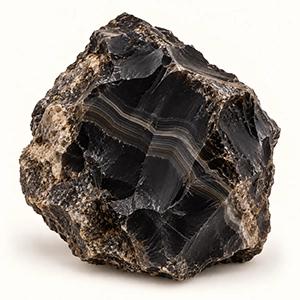 Black Onyx
Black chalcedony of Roman intaglios and cameos, linked today with boundaries.
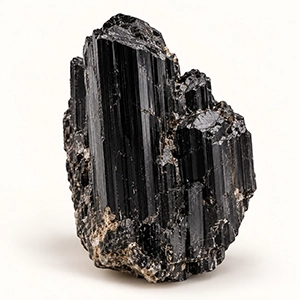 Black Tourmaline
Black schorl tourmaline, a record of the rocks it grew in, linked today with protection.
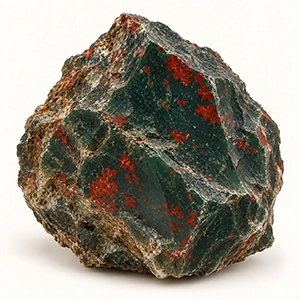 Bloodstone
Green stone flecked with red, the heliotrope of Rome, linked today with courage.
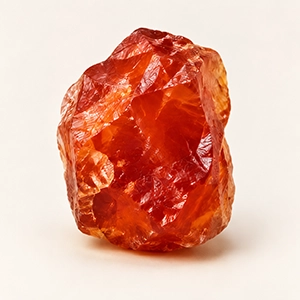 Carnelian
Orange-red chalcedony, carved since the Indus Valley, linked today with vitality.
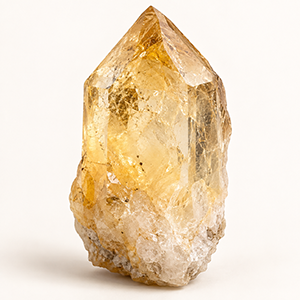 Citrine
Golden quartz, often heated amethyst, linked today with confidence and abundance.
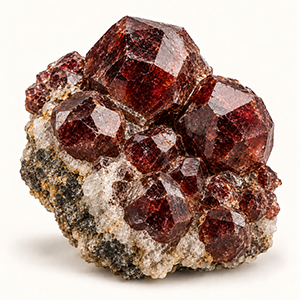 Garnet
A family of deep red gems, worn since ancient Egypt, linked today with vitality.
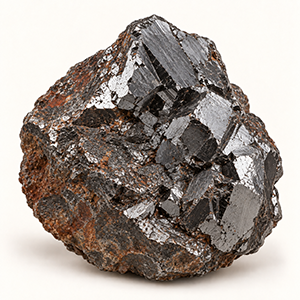 Hematite
Metallic iron mineral, once red ochre and pigment, linked today with grounding.
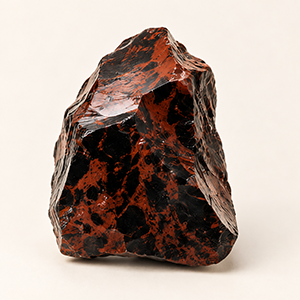 Mahogany Obsidian
Black and red-brown volcanic glass, once mirrors, linked today with resilience.
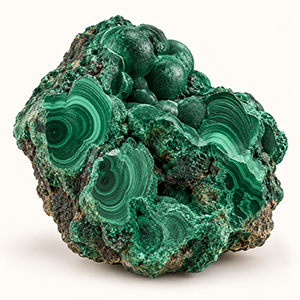 Malachite
Banded green copper mineral, once eye paint and pigment, linked today with change.
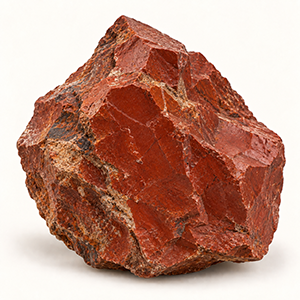 Red Jasper
Opaque red stone of Egyptian amulets and seals, linked today with endurance.
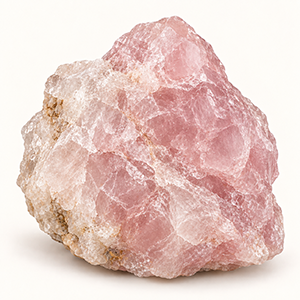 Rose Quartz
Pink quartz, worn for thousands of years, linked today with love and the Heart.
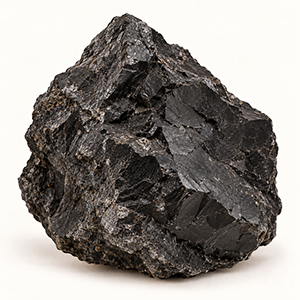 Shungite
Ancient carbon-rich rock from Karelia, linked today with protection and clearing.
 Smoky Quartz
Smoky brown quartz, Scotland’s cairngorm, linked today with gentle grounding.
 Turquoise
Sky-blue copper mineral, treasured from Egypt to Persia, linked today with protection.