Meaning, symbolism, healing traditions, uses and care
Bloodstone
Bloodstone is a dark green chalcedony flecked with red, also known by its older name, heliotrope. In contemporary crystal practice it is the stone of grounded vitality and courage, connected with the Root.
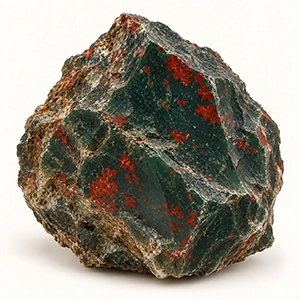
Its oldest identity was not only about blood. Heliotrope comes from Greek words connected with the sun, and an old belief held that the stone, placed in water, could make the reflected sun appear red.
At a glance
- Color
- Dark green with red, reddish-brown or occasionally yellowish markings
- Material
- Chalcedony (SiO₂), traditionally described as dark green jasper with red inclusions
- Other name
- Heliotrope
- Hardness
- Approximately 6.5 to 7 on the Mohs scale
- Birthstone
- March, alongside aquamarine
- Common sources
- India is a major commercial source, with more from Brazil, Australia, China, the United States and other regions
- Energy center
- Root, with some contemporary traditions also connecting its green color with Heart energy
GIA describes bloodstone as a dark green jasper with red inclusions of iron oxides, particularly hematite. The red is not blood trapped in the stone. It can appear as small points, larger patches or irregular streaks, and not every piece has dramatic bright spots: natural material varies considerably.
What bloodstone represents today
In contemporary crystal and metaphysical traditions, bloodstone is associated with vitality, courage, grounding and endurance, and with a protection that means feeling supported enough to move through difficulty rather than avoid it. Its courage is the steady kind: staying present and keeping your center when conditions become hard.
It is often placed beside red jasper, but the two are described differently. Red jasper is slow, steady stability. Bloodstone brings more vitality and active resilience, and because it holds green as well as red, some practitioners also link it with the Heart.
A short history
Roman craftspeople carved heliotrope into intaglios, gems engraved below the surface; The Met holds examples from roughly the first century BCE to the third century CE. Much later, Christian tradition compared its red spots with the blood of Christ. A seventeenth-century Italian cameo in The Met, a bust of Christ crowned with thorns, uses the stone’s natural red markings as drops of blood, so the geology itself became part of the image.
What people often misunderstand about bloodstone
The common shortcut is: I need strength, so I need bloodstone. But “help me be stronger” can come from opposite places.
One person genuinely needs support to endure something long and demanding. Another is worn out precisely because they have been enduring for too long. One needs courage to stay present. Another needs courage to stop.
For the second person, more strength is not what is missing. What may be missing is permission to put something down.
Resilience is not the same as endless endurance. Sometimes strength keeps us moving. Sometimes it tells us when enough is enough.
When bloodstone may not be what you need
If you keep pushing through exhaustion because you feel responsible for everything, more emphasis on stamina may reinforce a habit that needs rest.
If your instinct in difficulty is always to become stronger, harder and more self-reliant: the missing quality may be receiving support.
If you already live almost entirely in practical survival mode, creativity, softness, emotional expression or spaciousness may matter more than another Root-centered stone.
If courage is mainly keeping you in a situation that repeatedly drains you, the support you need may be clarity or change, not greater endurance.
None of this makes bloodstone the wrong choice. Its symbolism can be powerful when a period genuinely asks for resilience. The real question is whether yours does.
The My Crystal Code view
The person first, the stone second
Bloodstone stands for strength, but it cannot tell you whether strength is what you are short of. Knowing what a crystal traditionally represents is not the same as knowing whether it is the right crystal for you right now. My Crystal Code looks at the whole person before suggesting any support, and only then asks which stone fits.
How people use bloodstone
- Grounding meditation: Hold a polished stone or place one near the lower body or feet.
- Long demanding periods: Keep it nearby when the intention is resilience and staying physically present.
- Before a challenge: Hold it before something that asks for steady rather than impulsive courage.
- Movement or training: Some people carry it during physical practice.
- Jewelry: Wear it as a pendant, ring, bracelet or beads.
Caring for bloodstone
- Cleaning: Warm water, mild soap and a soft brush.
- Heat: Avoid extreme heat.
- Chemicals: Keep it away from harsh household chemicals.
- Impact: Hard enough for many kinds of jewelry, but it can still chip if struck strongly.
- Storage: Store it apart from harder gemstones that could scratch the polished surface.
- Powder or ingestion: Do not grind bloodstone for ingestion or consume stone powders as part of a crystal practice.
Questions people often ask
Why is it called bloodstone?
Its dark green surface usually carries red iron-oxide inclusions that look like drops of blood. Later Christian tradition read those markings as Christ’s blood.
What does heliotrope mean?
It comes from Greek words connected with the sun, often read as “turning toward the sun”. Ancient belief held that the stone, placed in water, could make the reflected sun appear red.
Can bloodstone help with blood or circulation?
No. Its link with blood is symbolic and historical. The hematite in its red markings does not make bloodstone a medical treatment for any blood-related condition.
Did people really think bloodstone made you invisible?
Some did. GIA records old traditions crediting it with increasing strength and even making its wearer invisible. These belong to historical lore, not to the mineral.
Can bloodstone go in water?
Yes, for normal cleaning. Warm water is fine; long soaking is unnecessary.
Is bloodstone the right crystal for me?
It may be. Its tradition tells you what the stone stands for; whether that is the support you need right now is a personal question, and that is where My Crystal Code begins.
Discover which crystals fit you right now
Bloodstone shows what strength looks like in stone. The next question is whether strength is what you need, or something else entirely.
Start your readingSources
- Gemological Institute of America (GIA): Bloodstone as a March birthstone, heliotrope history, physical properties, traditional lore and care.
- The Metropolitan Museum of Art: Roman heliotrope intaglios and later European heliotrope carving.
- British Museum: Historical bloodstone and heliotrope lapidary objects.
- The Metropolitan Museum of Art: Bust of Christ crowned with thorns, a heliotrope cameo (17th century).
More in the Crystal Library
 Amethyst
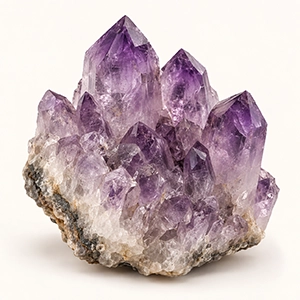
Purple quartz, once a stone of sobriety, linked today with calm and clarity.
 Apache Tear
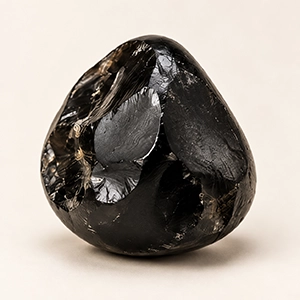
Small obsidian pebbles from Arizona perlite, linked today with grief and release.
 Black Obsidian
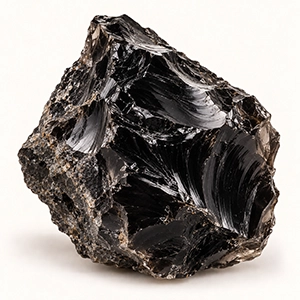
Natural volcanic glass, once blades and mirrors, linked today with grounding.
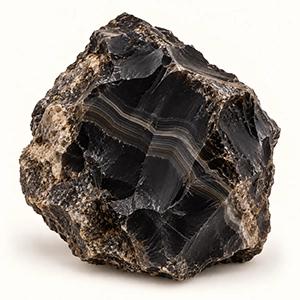 Black Onyx
Black chalcedony of Roman intaglios and cameos, linked today with boundaries.
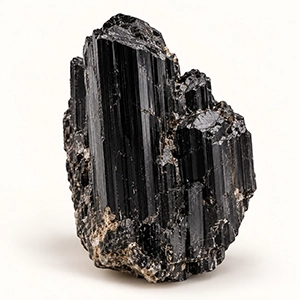 Black Tourmaline
Black schorl tourmaline, a record of the rocks it grew in, linked today with protection.
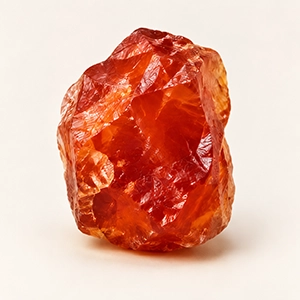 Carnelian
Orange-red chalcedony, carved since the Indus Valley, linked today with vitality.
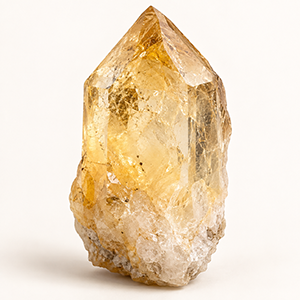 Citrine
Golden quartz, often heated amethyst, linked today with confidence and abundance.
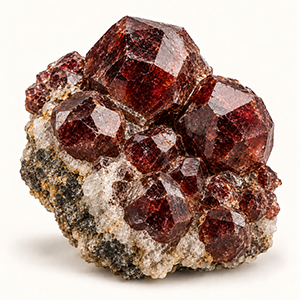 Garnet
A family of deep red gems, worn since ancient Egypt, linked today with vitality.
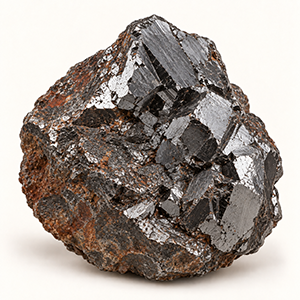 Hematite
Metallic iron mineral, once red ochre and pigment, linked today with grounding.
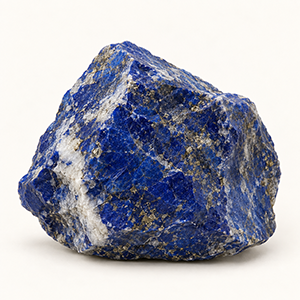 Lapis Lazuli
Deep blue stone from Afghanistan, once ground into the costliest blue in art.
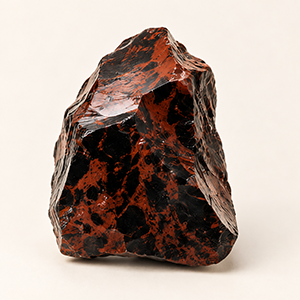 Mahogany Obsidian
Black and red-brown volcanic glass, once mirrors, linked today with resilience.
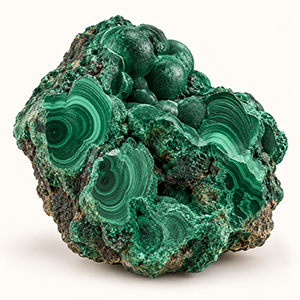 Malachite
Banded green copper mineral, once eye paint and pigment, linked today with change.
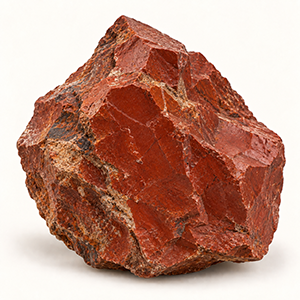 Red Jasper
Opaque red stone of Egyptian amulets and seals, linked today with endurance.
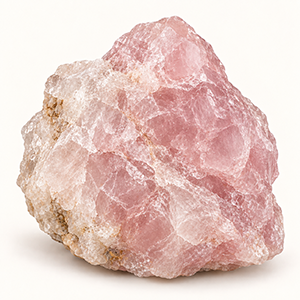 Rose Quartz
Pink quartz, worn for thousands of years, linked today with love and the Heart.
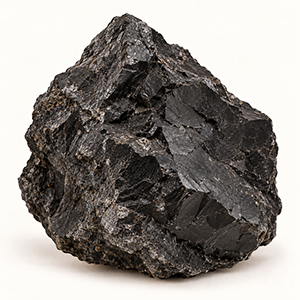 Shungite
Ancient carbon-rich rock from Karelia, linked today with protection and clearing.
 Smoky Quartz
Smoky brown quartz, Scotland’s cairngorm, linked today with gentle grounding.
 Turquoise
Sky-blue copper mineral, treasured from Egypt to Persia, linked today with protection.