Meaning, symbolism, healing traditions, uses and care
Black Obsidian
Black obsidian looks like a crystal and is sold beside crystals, but geologically it is something different: natural volcanic glass. In contemporary crystal practice it is the stone of grounding and protection, connected with the Root.
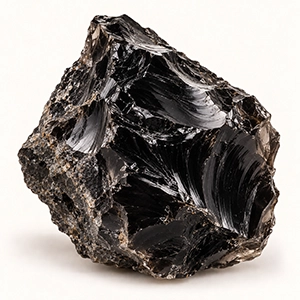
Long before it was a symbol, it was technology. For thousands of years people shaped it into blades, tools and weapons, because it breaks into extraordinarily sharp edges.
At a glance
- Color
- Black to very dark brown or gray, sometimes with sheen or subtle banding
- Material
- Natural volcanic glass, usually silica-rich
- Structure
- Amorphous rather than conventionally crystalline
- Hardness
- Approximately 5 to 5.5 on the Mohs scale
- Fracture
- Conchoidal, with smooth curved surfaces and potentially extremely sharp edges
- Occurrence
- Volcanic regions worldwide
- Energy center
- Root
Obsidian forms when silica-rich lava cools so fast that its atoms never settle into the repeating structure of a crystal. Its structure stays disordered, like glass. That is why it breaks with a conchoidal fracture, leaving smooth curves and edges that can be sharper than ordinary metal blades.
What black obsidian represents today
In contemporary crystal and metaphysical traditions, black obsidian is associated with grounding, protection, energetic clearing, truth, boundaries and shadow work. Its character is described as dense and direct. Where some stones are linked with soothing or opening, obsidian is worked with to ground, to protect and to look clearly at what sits beneath the surface.
Its body shaped that meaning: a razor-like edge became a symbol for cutting through illusion, and a reflective black surface a mirror for the self.
A short history
For most of its human story, obsidian was practical: knives, scrapers, projectile points and weapons, traded over considerable distances. In Mesoamerica it also entered ceremonial life. Some pieces were polished into dark mirrors, and in some traditions those mirrors were connected with ritual and divination; The Metropolitan Museum of Art preserves pre-Columbian examples. Obsidian has literally been used as a mirror. Today it is described as one.
A glass that keeps a record
Different volcanic sources can give obsidian distinctive chemical signatures, so archaeologists can often trace an ancient tool to where its glass formed, and a blade found far from its volcano becomes evidence of exchange. A freshly broken surface also slowly absorbs water, forming a hydration layer that, with careful calibration, helps date the tool. The glass keeps its own record.
What people often misunderstand about black obsidian
The common shortcut is: “I need protection,” so I need black obsidian. But the same words can come from opposite places.
One person is genuinely open to an overwhelming environment and needs firmer boundaries. Another is already highly guarded, so focused on avoiding negative energy that protection has become constant vigilance.
For the first, a denser layer of defense may be exactly right. For the second, it tightens what is already tight. What may be missing is openness and ease.
Protection helps when too much is getting in. It helps far less when very little is allowed in at all.
When black obsidian may not be what you need
If you are already guarded, or constantly scanning your surroundings for what feels unsafe, and what you lack is ease rather than another layer of defense.
If you already spend your days analyzing yourself and searching for hidden problems: integration, compassion or movement may matter more.
If you already feel heavy, slow or firmly anchored in practical concerns, another strongly grounding stone may not add what is missing.
If you keep trying to clear negativity, the next step may be turning toward what you want to build or invite in.
None of this makes black obsidian too strong or unsuitable. More protection is not always more balance, and more introspection is not always more clarity.
The My Crystal Code view
Protection is a meaning, not a prescription
Black obsidian’s meaning is direct and easy to reach for, which is exactly why it deserves a second look. Knowing what a crystal traditionally represents is not the same as knowing whether it is the right crystal for you right now. My Crystal Code looks at the whole person before suggesting any support.
How people use black obsidian
- Grounding meditation: Hold a polished piece, or place it near the feet during meditation.
- Protection: Carry it, wear it or place it near the entrance of a personal space.
- Reflection: Keep it nearby while journaling about experiences that feel difficult to look at directly.
- Personal spaces: Place it on a desk or in a room where grounding and boundaries are part of the intention.
- Obsidian mirrors: Polished obsidian mirrors are still used in some contemporary spiritual and divination practices.
Caring for black obsidian
- Cleaning: Warm water, mild soap and a soft cloth.
- Scratching: It is softer than quartz, so harder gemstones and even abrasive dust can scratch polished surfaces.
- Impact: Protect it from hard blows. Glassy materials can chip or fracture.
- Sharp edges: Broken obsidian can produce extremely sharp edges. Handle damaged pieces carefully.
- Heat: Avoid strong heat and sudden temperature changes.
- Ultrasonic and steam: Avoid mechanical cleaning systems, particularly for pieces with internal stresses or inclusions. Gentle hand cleaning is preferable.
- Storage: Keep polished obsidian apart from harder gemstones and protected from impact.
For handling or placing on the body, smooth polished pieces are much safer than raw, freshly fractured obsidian.
Questions people often ask
Is black obsidian actually a crystal?
Geologically, no. It is natural volcanic glass rather than a conventionally crystalline mineral. It is nevertheless widely included in modern crystal practice.
Can black obsidian go in water?
Yes, for ordinary cleaning. Warm water and mild soap are suitable; long soaking is unnecessary.
Does black obsidian break easily?
It can chip or fracture, because it is glassy and relatively brittle.
What is snowflake obsidian?
Black volcanic glass containing pale radiating patches of the mineral cristobalite, which create its familiar snowflake-like look.
Is black obsidian the right crystal for me?
It may be. Its meaning tells you what the stone represents; whether that is the support you need right now is a personal question, and that is where My Crystal Code begins.
Discover which crystals fit you right now
Black obsidian’s meaning tells you what it guards against. The more useful question is what you need right now, and which crystals actually meet it.
Start your readingSources
- U.S. Geological Survey (USGS): Obsidian formation, rhyolitic composition, rapid cooling and conchoidal fracture.
- Smithsonian Institution: Ancient obsidian tools, trade, sourcing and obsidian hydration dating.
- The Metropolitan Museum of Art: Pre-Columbian obsidian mirrors, sculpture and ritual contexts.
- Gemological references and GIA: Obsidian varieties, amorphous structure, optical effects and lapidary properties.
More in the Crystal Library
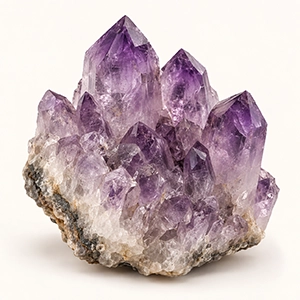 Amethyst
Purple quartz, once a stone of sobriety, linked today with calm and clarity.
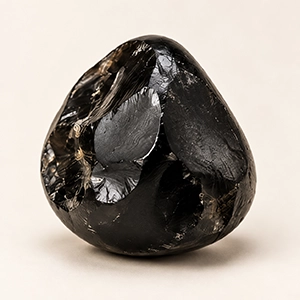 Apache Tear
Small obsidian pebbles from Arizona perlite, linked today with grief and release.
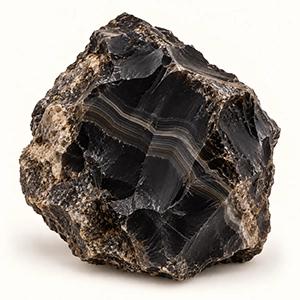 Black Onyx
Black chalcedony of Roman intaglios and cameos, linked today with boundaries.
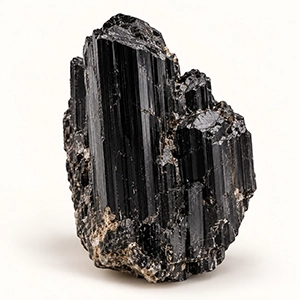 Black Tourmaline
Black schorl tourmaline, a record of the rocks it grew in, linked today with protection.
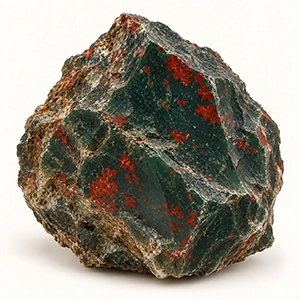 Bloodstone
Green stone flecked with red, the heliotrope of Rome, linked today with courage.
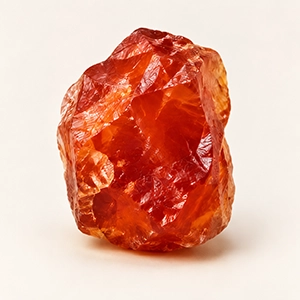 Carnelian
Orange-red chalcedony, carved since the Indus Valley, linked today with vitality.
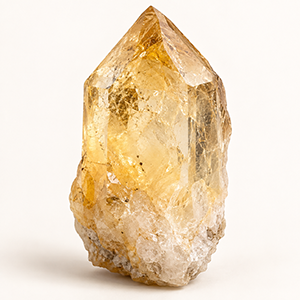 Citrine
Golden quartz, often heated amethyst, linked today with confidence and abundance.
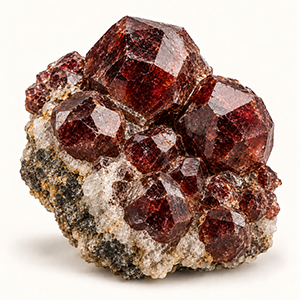 Garnet
A family of deep red gems, worn since ancient Egypt, linked today with vitality.
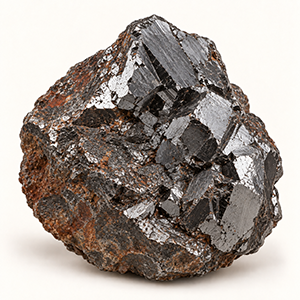 Hematite
Metallic iron mineral, once red ochre and pigment, linked today with grounding.
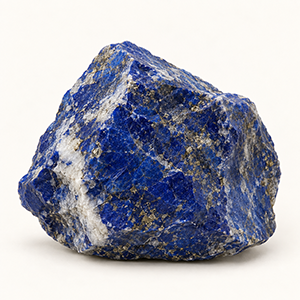 Lapis Lazuli
Deep blue stone from Afghanistan, once ground into the costliest blue in art.
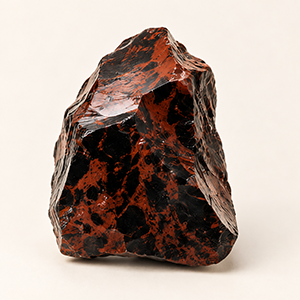 Mahogany Obsidian
Black and red-brown volcanic glass, once mirrors, linked today with resilience.
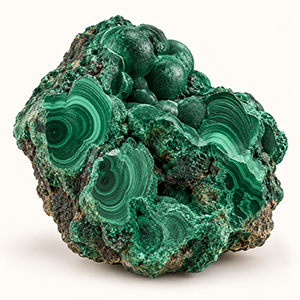 Malachite
Banded green copper mineral, once eye paint and pigment, linked today with change.
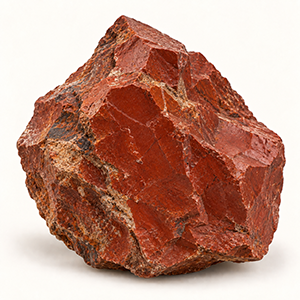 Red Jasper
Opaque red stone of Egyptian amulets and seals, linked today with endurance.
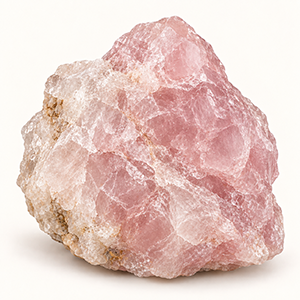 Rose Quartz
Pink quartz, worn for thousands of years, linked today with love and the Heart.
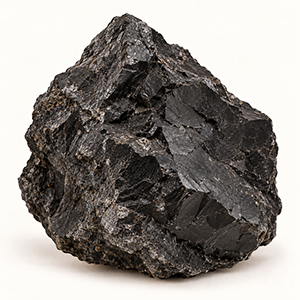 Shungite
Ancient carbon-rich rock from Karelia, linked today with protection and clearing.
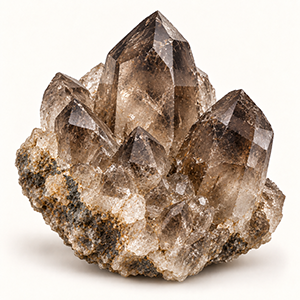 Smoky Quartz
Smoky brown quartz, Scotland’s cairngorm, linked today with gentle grounding.
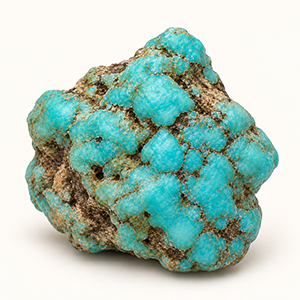 Turquoise
Sky-blue copper mineral, treasured from Egypt to Persia, linked today with protection.