Meaning, symbolism, healing traditions, uses and care
Apache Tear
Apache tears are small, rounded pieces of obsidian, a natural volcanic glass. In contemporary crystal practice they are the stone of grief held on steady ground, connected with the Root.
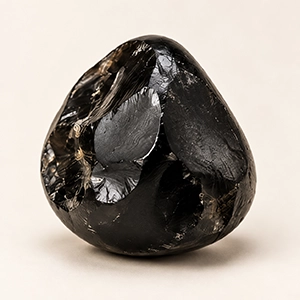
At first glance they look almost completely black. Hold a thinner piece toward strong light, though, and many turn translucent at the edges, revealing smoky brown glass inside.
At a glance
- Color
- Black, smoky black to dark brown, often translucent at thin edges
- Material
- Natural volcanic glass, silica-rich and commonly rhyolitic; amorphous rather than crystalline
- Geological term
- A form of obsidian nodule, often called marekanite
- Hardness
- Approximately 5 to 5.5 on the Mohs scale
- Formation
- Relatively fresh obsidian cores within hydrated volcanic glass called perlite
- Notable locality
- The Superior and Picketpost Mountain area of Arizona, although similar nodules occur elsewhere
- Energy center
- Root
Apache tears are a form of obsidian, not a separate mineral. Obsidian forms when silica-rich lava cools so fast it becomes glass before large crystals can grow. Some of that glass later absorbs water and becomes perlite. Where hydration stops short, fresh obsidian survives as rounded cores inside it, often within onion-skin fractures, and weathers out as loose dark pebbles.
What Apache tears represent today
In contemporary crystal and metaphysical traditions, Apache tears are associated with grief, grounding, emotional release, comfort, protection and resilience. They are often called the gentler obsidian: where black obsidian is known for directness, Apache tears are reached for when difficult emotion needs to move while you stay grounded. The resilience here is not pretending a loss has no effect; it is staying connected with life while carrying it.
A short history
The name comes from a widely circulated Arizona legend: Apache warriors trapped near Apache Leap, by what is now Superior, chose death over capture, and the tears of their mourning families became the dark stones. Versions differ, and local historians and archaeologists note there is no definitive documentation of the event as later folklore tells it. It is best understood as regional folklore, not verified history. Apache peoples are also not one single group; different communities have their own histories and traditions, so the story should not be generalized into what “the Apache believed.” Obsidian itself has a much longer Indigenous history in the region.
The core that stayed unchanged
Perlite, the glass around Apache tears, holds water. Heated industrially, it expands dramatically into a light, porous material used in construction, insulation and soil mixes. Apache tears are the opposite part of the story: the cores the water never fully reached.
What people often misunderstand about Apache tears
The common shortcut is: grief calls for Apache tears. But grief does not look the same in every person, or in one person over time.
Someone holding emotion back may need permission to feel, and the stone’s symbolism offers exactly that. Someone already immersed in grief may need the opposite: more ground in ordinary life, not another invitation to go deeper.
What is missing may be expression, movement or human connection. After a long loss, it may be a renewed sense of direction. Mourning and rebuilding are both part of grief, and they rarely call for the same support.
When Apache tears may not be what you need
If most of your emotional energy already goes into revisiting a loss, and what you need is movement, connection or engagement with life.
If emotion is already filling every part of the day: grounding without further emotional excavation may matter more.
If loss has made the world feel unsafe and you keep reaching for protection: what is missing may be shifting toward trust or connection.
If the name or its legend does not feel appropriate or meaningful to you: another grounding stone may suit your practice better.
None of this makes Apache tears wrong. But grief changes over time, and the support that fits one stage may not fit the next.
The My Crystal Code view
Grief is a process, not a keyword
Apache tears give grief a steady, gentle symbol, but a symbol describes the stone, not where you are in your own loss. Knowing what a crystal traditionally represents is not the same as knowing whether it is the right crystal for you right now. My Crystal Code looks at the whole person before suggesting any support: the person comes first, the crystal second.
How people use Apache tears
- Remembrance: Hold a polished stone during quiet remembrance or journaling.
- Grounding meditation: Hold it, or place it near the feet, while focusing on breath and physical sensation.
- Memorial spaces: Set it near a photograph or meaningful object connected with someone or something you have lost.
- Pocket stone: Its small natural size makes it easy to carry, loose or as jewelry.
Caring for Apache tears
- Cleaning: Lukewarm water, mild soap and a soft cloth.
- Impact: Obsidian is glassy and can chip or fracture if dropped.
- Sharp edges: A broken Apache tear can leave sharp, glass-like edges. Handle damaged pieces carefully.
- Heat: Avoid strong heat and sudden temperature changes.
- Steam: Avoid steam cleaning.
- Ultrasonic cleaning: Gentle hand cleaning is preferable.
- Storage: Keep it apart from harder stones that could scratch it.
Questions people often ask
Why are they called Apache tears?
From an Arizona legend linking the stones with the mourning of Apache families near what is now Superior. Versions differ and the event is not definitively documented, so it is best read as regional folklore.
Is an Apache tear different from black obsidian?
It is still obsidian. The main difference is its form: Apache tears occur as rounded nodules, often within perlite. Geologists also call these nodules marekanite.
Can Apache tears go in water?
Yes, for cleaning. Lukewarm water, mild soap and a soft cloth are enough.
Are Apache tears only found in Arizona?
No. The Superior and Picketpost Mountain area is the most famous source, but similar obsidian nodules occur elsewhere. The Smithsonian holds one collected in New Mexico during the 1940s.
Are Apache tears the right crystal for me?
It may be. Its meaning tells you what the stone represents; whether that is the support you need at this stage is a personal question, and that is where My Crystal Code begins.
Discover which crystals fit you right now
Crystal meanings are a beginning. Grief and life both change, and the next question is which stones fit you as you are now.
Start your readingSources
- Arizona Geological Survey: Apache tears in Arizona's perlitic volcanic fields, and Arizona perlite geology.
- U.S. Geological Survey: Apache tears in obsidian and perlite deposits, and the physical and industrial properties of perlite.
- Smithsonian Institution and regional Arizona historical sources: Museum specimens identified as Apache tear obsidian and the long-standing Superior, Arizona folklore associated with the name.
- Journal of Geosciences (2011): Apache tears as fresh obsidian cores in perlite.
More in the Crystal Library
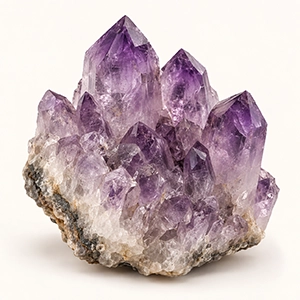 Amethyst
Purple quartz, once a stone of sobriety, linked today with calm and clarity.
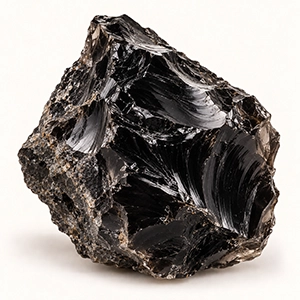 Black Obsidian
Natural volcanic glass, once blades and mirrors, linked today with grounding.
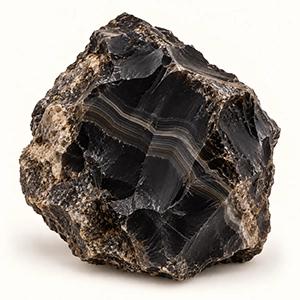 Black Onyx
Black chalcedony of Roman intaglios and cameos, linked today with boundaries.
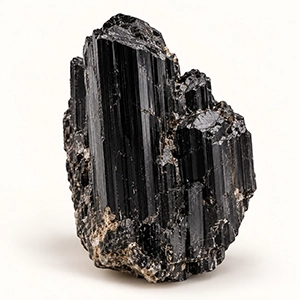 Black Tourmaline
Black schorl tourmaline, a record of the rocks it grew in, linked today with protection.
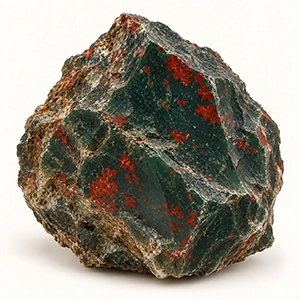 Bloodstone
Green stone flecked with red, the heliotrope of Rome, linked today with courage.
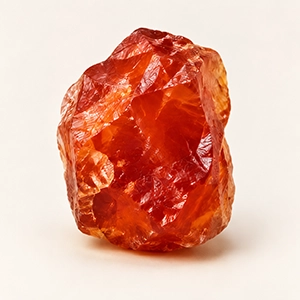 Carnelian
Orange-red chalcedony, carved since the Indus Valley, linked today with vitality.
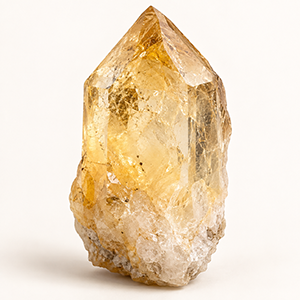 Citrine
Golden quartz, often heated amethyst, linked today with confidence and abundance.
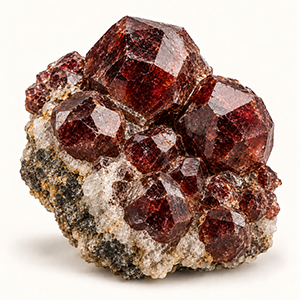 Garnet
A family of deep red gems, worn since ancient Egypt, linked today with vitality.
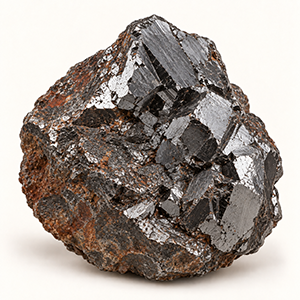 Hematite
Metallic iron mineral, once red ochre and pigment, linked today with grounding.
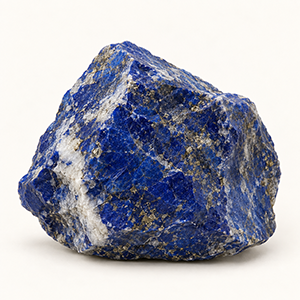 Lapis Lazuli
Deep blue stone from Afghanistan, once ground into the costliest blue in art.
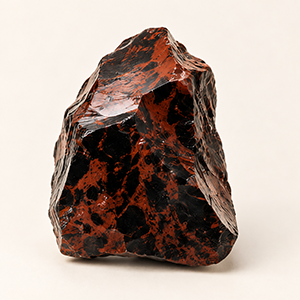 Mahogany Obsidian
Black and red-brown volcanic glass, once mirrors, linked today with resilience.
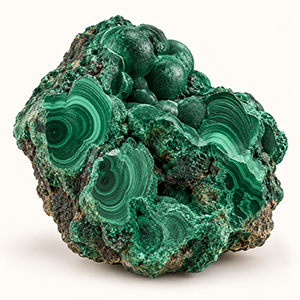 Malachite
Banded green copper mineral, once eye paint and pigment, linked today with change.
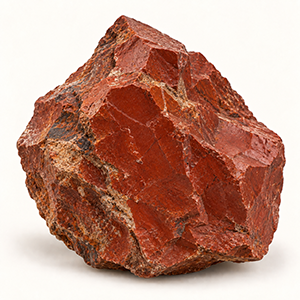 Red Jasper
Opaque red stone of Egyptian amulets and seals, linked today with endurance.
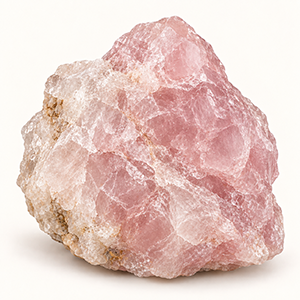 Rose Quartz
Pink quartz, worn for thousands of years, linked today with love and the Heart.
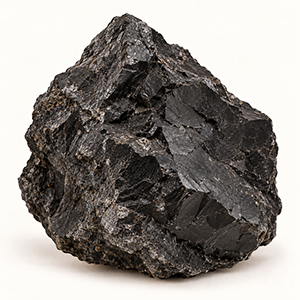 Shungite
Ancient carbon-rich rock from Karelia, linked today with protection and clearing.
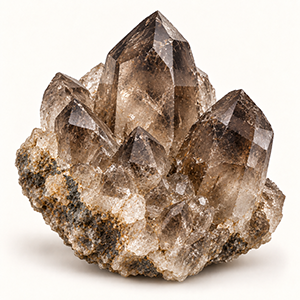 Smoky Quartz
Smoky brown quartz, Scotland’s cairngorm, linked today with gentle grounding.
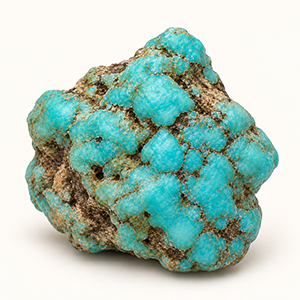 Turquoise
Sky-blue copper mineral, treasured from Egypt to Persia, linked today with protection.