Meaning, symbolism, healing traditions, uses and care
Mahogany Obsidian
Mahogany obsidian is natural volcanic glass, deep black moving through patches, streaks and clouds of reddish brown. In contemporary crystal practice it is the stone of grounding and steady resilience, connected above all with the Root.
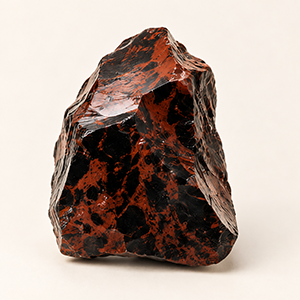
It looks as though two versions of the same volcanic story have been folded together. And its human story runs deep: people have worked obsidian for more than ten thousand years, and reddish-brown obsidian was polished into Mesoamerican mirrors.
At a glance
- Color
- Black with reddish-brown, rust or mahogany patches and streaks
- Material
- Natural volcanic glass, amorphous rather than conventionally crystalline
- Hardness
- Approximately 5 to 5.5 on the Mohs scale
- Fracture
- Conchoidal, capable of producing very sharp edges
- Coloring
- Reddish-brown areas are associated with iron oxidation and nanoscale iron-oxide inclusions
- Occurrence
- Volcanic regions worldwide, with notable mahogany obsidian sources in Mexico and the western United States
- Energy center
- Root, with some contemporary traditions also connecting it with lower-body vitality
Obsidian forms when silica-rich lava cools so quickly that it becomes glass before crystals can grow. Most obsidian is black; mahogany obsidian holds black and reddish-brown glass together. The warm color comes from iron, including tiny iron-oxide inclusions such as hematite or limonite, so the pattern is part of the glass itself, not paint or surface staining.
What mahogany obsidian represents today
In contemporary crystal and metaphysical traditions, mahogany obsidian is associated with grounding, stability, protection, strength and resilience, and with releasing habits that feel outdated. Practitioners describe it as warmer and less severe than black obsidian: earthy and steady rather than intensely confronting. Its resilience is less about becoming harder and more about staying present while something changes. Some also link its red-brown color with lower-body vitality.
A short history
Long before obsidian was a protection stone, people valued it for the way it breaks: into smooth curves with extremely fine edges, ideal for blades and tools. In Mesoamerica, skilled artisans also ground and polished it until it reflected, and obsidian mirrors could carry ritual meaning. Indigenous artisans kept working large pieces after the Spanish conquest, often for European buyers. One surviving tablet is made from reddish-brown mahogany obsidian.
A color that still tells you where it came from
Different volcanic sources leave distinct chemical signatures in their glass. Smithsonian researchers used microscopic and X-ray methods on a large polished mahogany obsidian mirror tablet and traced its material to the Los Azufres volcanic complex in Michoacán, in central Mexico, a location not previously associated with archaeological artifacts. The reddish-brown color did not hide the stone’s origin.
What people often misunderstand about mahogany obsidian
The common shortcut is: I need grounding, so I need mahogany obsidian. But the wish for stability can come from opposite places.
One person genuinely needs more physical presence and steadiness. Another is already holding themselves very tightly, controlled and resistant to change. The same goes for protection: one person’s boundaries are weak, while another protects themselves so well that connection has become difficult.
Even the wish to break an old habit can mislead. Someone may need courage to let it go. Someone else is always fixing themselves and may need acceptance more than another transformation project.
The words sound the same. What is missing may be movement, warmth or room to breathe, not more steadiness.
When mahogany obsidian may not be what you need
If you already feel heavy, cautious or focused on security, and what you lack is movement, creativity or expansion.
If your instinct is to shield yourself from every difficult interaction: more protection may deepen distance rather than build healthy boundaries.
If you are always working on old habits, and rest, compassion or simply taking part in life would bring more balance.
If you are stable but stagnant, and the missing quality is activation rather than more steadiness.
None of this makes mahogany obsidian the wrong stone. Sometimes its grounded resilience is exactly what helps. The question is whether stability is what needs strengthening.
The My Crystal Code view
Steadiness is not always the missing piece
Mahogany obsidian describes a warm, steady kind of strength, but a stone’s character does not describe yours. Knowing what a crystal traditionally represents is not the same as knowing whether it is the right crystal for you right now. My Crystal Code looks at the whole person before suggesting any support, so the person comes first and the crystal second.
How people use mahogany obsidian
- Grounding meditation: Hold a polished stone, or place one near the feet or lower body during a crystal layout.
- Periods of change: Keep it nearby when the intention is to move through change without losing stability.
- Boundaries: Carry it when reflecting on where your responsibilities end and another person’s begin.
- Journaling: Hold it while writing about recurring habits, transitions or what feels ready to change.
- Jewelry and spaces: Wear it as a pendant, bracelet or beads, or place it on a desk for steadiness and practical focus.
Caring for mahogany obsidian
- Cleaning: Lukewarm water, mild soap and a soft cloth.
- Impact: Obsidian is glassy and can chip or fracture if dropped.
- Sharp edges: Broken obsidian can produce extremely sharp edges; handle damaged pieces carefully.
- Heat: Avoid strong heat and sudden temperature changes.
- Steam and ultrasonic: Avoid steam cleaning; gentle hand cleaning is preferable to ultrasonic cleaners.
- Storage: Store it apart from harder gemstones that may scratch its polished surface.
Questions people often ask
Is mahogany obsidian real obsidian?
Yes. It is natural volcanic glass with black and reddish-brown coloration, a color variety of obsidian rather than a separate mineral species.
Why is it called mahogany obsidian?
The name describes its look. Where black and brown glass occur together, the stone is commonly called mahogany obsidian.
Is mahogany obsidian the same as black obsidian?
Both are natural volcanic glass. Mahogany obsidian has characteristic reddish-brown areas, while ordinary black obsidian is more uniformly dark.
Can mahogany obsidian go in water?
Yes, for ordinary cleaning. Lukewarm water, mild soap and a soft cloth are enough; skip steam cleaning.
Is mahogany obsidian fragile?
It is glassy, at about 5 to 5.5 on the Mohs scale, and can chip if dropped. A broken piece can be extremely sharp.
Is mahogany obsidian the right crystal for me?
It may be. Its meaning tells you what the stone represents; whether steadiness is the support you need right now is a personal question, and that is where My Crystal Code begins.
Discover which crystals fit you right now
Mahogany obsidian offers one kind of steadiness. The next question is whether steadiness is what you need, or whether something else is asking for room.
Start your readingSources
- U.S. National Park Service: Obsidian formation and volcanic-glass properties.
- Smithsonian Museum Conservation Institute and Smithsonian Contributions to Anthropology: Mesoamerican mahogany obsidian mirror tablets, archaeological sourcing and reddish-brown obsidian from central Mexico.
- Oregon State University Volcano World: Obsidian color variation and the role of iron-oxide inclusions in red and brown obsidian.
- Quaternary International (2018): iron and the color of mahogany and black obsidian from the Carpathians.
- Martinez and others (2022): rectangular obsidian mirrors from Mexico and Indigenous-colonial intersections.
More in the Crystal Library
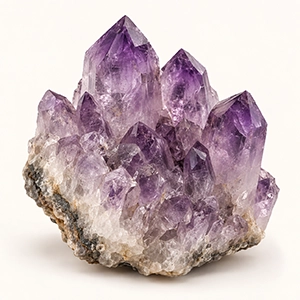 Amethyst
Purple quartz, once a stone of sobriety, linked today with calm and clarity.
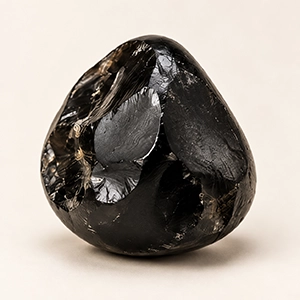 Apache Tear
Small obsidian pebbles from Arizona perlite, linked today with grief and release.
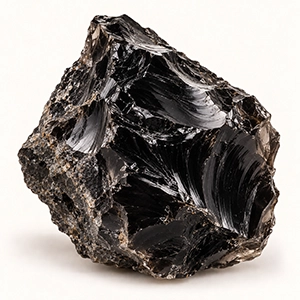 Black Obsidian
Natural volcanic glass, once blades and mirrors, linked today with grounding.
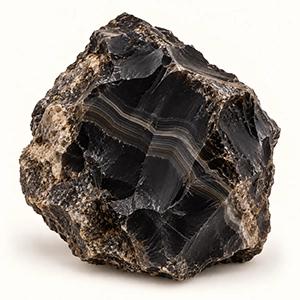 Black Onyx
Black chalcedony of Roman intaglios and cameos, linked today with boundaries.
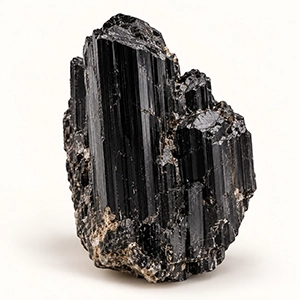 Black Tourmaline
Black schorl tourmaline, a record of the rocks it grew in, linked today with protection.
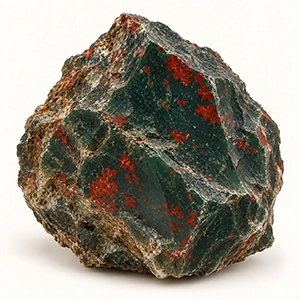 Bloodstone
Green stone flecked with red, the heliotrope of Rome, linked today with courage.
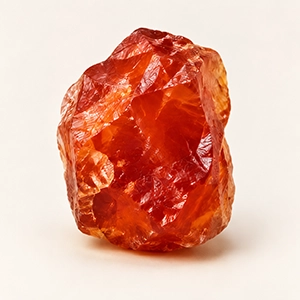 Carnelian
Orange-red chalcedony, carved since the Indus Valley, linked today with vitality.
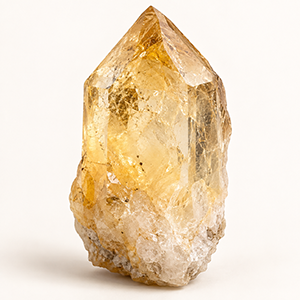 Citrine
Golden quartz, often heated amethyst, linked today with confidence and abundance.
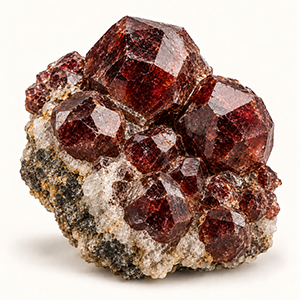 Garnet
A family of deep red gems, worn since ancient Egypt, linked today with vitality.
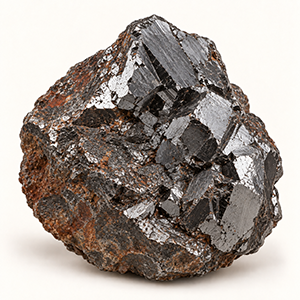 Hematite
Metallic iron mineral, once red ochre and pigment, linked today with grounding.
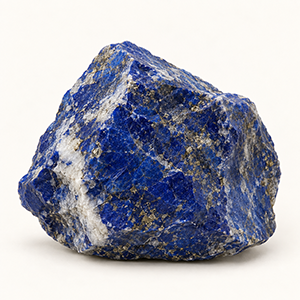 Lapis Lazuli
Deep blue stone from Afghanistan, once ground into the costliest blue in art.
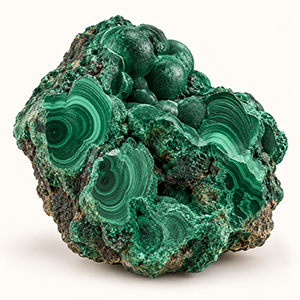 Malachite
Banded green copper mineral, once eye paint and pigment, linked today with change.
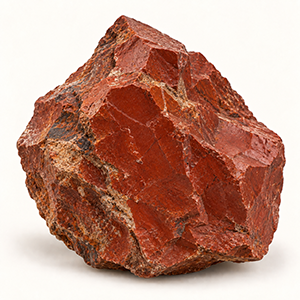 Red Jasper
Opaque red stone of Egyptian amulets and seals, linked today with endurance.
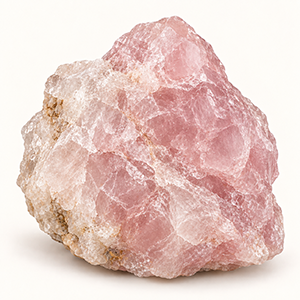 Rose Quartz
Pink quartz, worn for thousands of years, linked today with love and the Heart.
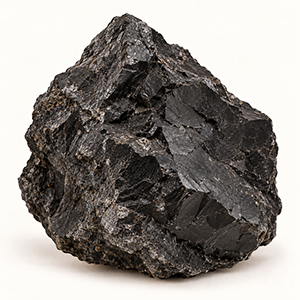 Shungite
Ancient carbon-rich rock from Karelia, linked today with protection and clearing.
 Smoky Quartz
Smoky brown quartz, Scotland’s cairngorm, linked today with gentle grounding.
 Turquoise
Sky-blue copper mineral, treasured from Egypt to Persia, linked today with protection.