Meaning, symbolism, healing traditions, uses and care
Malachite
Malachite is a green copper mineral, and one of the hardest stones to mistake for another: its green moves through bands, circles and waves, from almost luminous to nearly black. In contemporary crystal practice it is the stone of transformation, connected with the Heart.
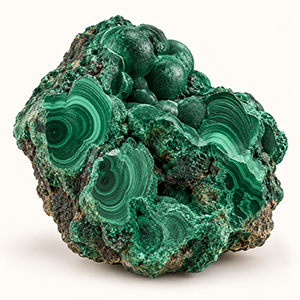
Its bond with people is far older than crystal healing. Thousands of years ago it was already being ground into green eye paint and pigment, in cultures where green itself stood for life and renewal.
At a glance
- Color
- Bright green to deep green, often with bands, rings and flowing patterns
- Mineral
- Copper carbonate hydroxide (Cu₂CO₃(OH)₂)
- Hardness
- Approximately 3.5 to 4 on the Mohs scale
- Crystal system
- Monoclinic
- Appearance
- Usually opaque
- Common sources
- Copper deposits worldwide, with notable material from the Democratic Republic of the Congo and Namibia
- Energy center
- Heart, with some traditions also connecting it with the Solar Plexus
Malachite is a secondary copper mineral. It forms in the weathered, oxidized parts of copper deposits, where water and chemical reactions turn existing copper minerals into new ones near the Earth’s surface. Its green comes from the copper. Its bands are not added by cutting: they are the mineral’s growth history, layers formed over time and revealed when the stone is polished.
What malachite represents today
In contemporary crystal and metaphysical traditions, malachite is associated with transformation, emotional release and emotional honesty, and with the Heart energy center. It is also known as a stone of protection and boundaries, where protection means becoming clearer about what belongs in your space rather than building a wall.
Its character is usually described as more direct than gentler Heart stones such as rose quartz: less tenderness, more movement and change.
A short history
Ancient Egyptians crushed malachite on palettes into a green powder and wore it as eye paint, especially in earlier periods before black galena became more dominant. Ground malachite is also one of the oldest known mineral green pigments, and it appears in ancient Egyptian tomb painting.
A copper stone, cut for pattern
Malachite has historically been used as an ore of copper, and its bright green can make copper visible in weathered rock. Unlike a transparent gem cut for brilliance, it is cut to reveal pattern: the same piece can show stripes, circles or eye-like forms depending on how it is oriented.
What people often misunderstand about malachite
The common shortcut is: if you feel stuck, you need malachite.
But stuck can come from opposite places. One person has been avoiding a decision, and change is exactly what is waiting. Another is exhausted from constantly trying to reinvent themselves, and more movement is the last thing they need.
Emotional honesty works the same way. For someone who keeps feelings beneath the surface, bringing them into awareness may be the point. For someone already processing everything intensely, what is missing may be grounding or steadiness, not more digging.
Transformation is not always about starting something new. Sometimes it means becoming steady enough to integrate the change already happening.
When malachite may not be what you need
If your life is already moving through intense change or instability, and you need solid ground more than another push.
If you already process your feelings constantly and find it hard to step away from them.
If you tend to treat every uncomfortable period as something to fix right away, when what it asks for is patience.
If the Heart support you are looking for is gentleness, receiving or emotional safety, rather than deeper change.
None of this makes malachite a bad crystal. Sometimes transformation is exactly what the moment calls for; sometimes the more supportive direction is to steady yourself first.
The My Crystal Code view
Wanting change is not the same as needing it
Malachite is often handed to anyone who says they feel stuck, yet the same words can hide very different needs. Knowing what a crystal traditionally represents is not the same as knowing whether it is the right crystal for you right now. My Crystal Code looks at the whole person before suggesting any support: the person comes first, the crystal second.
How people use malachite
- Heart meditation: Place a smooth polished piece near the Heart center during quiet reflection.
- Periods of change: Keep it nearby during a meaningful transition.
- Boundary reflection: Hold it while journaling about giving, receiving and emotional limits.
- Protection: Wear it or place it in a personal space as part of an energetic protection practice.
- Jewelry: Worn as a pendant, bracelet, earrings or ring; treat it gently, since it is soft.
Caring for malachite
- Cleaning: Lukewarm water, a little mild soap and a soft cloth; dry it carefully and avoid prolonged soaking.
- Acids: Keep it away from vinegar, lemon juice and acidic cleaners. Malachite is sensitive to acids.
- Chemicals: Keep it away from harsh household chemicals.
- Heat: Avoid strong heat and sudden temperature changes.
- Ultrasonic and steam: Avoid ultrasonic cleaners and steam cleaning.
- Storage: Store it apart from harder gemstones that could scratch it.
- Raw material: Malachite contains copper. Cutting, drilling or sanding creates dust that should not be inhaled; use protective equipment.
- Crystal water: Do not prepare drinking water by soaking malachite directly.
Malachite should not be ingested. Working with it never requires drinking anything that has been in direct contact with the mineral.
Questions people often ask
Why is malachite green, and why does it have bands?
The green comes from copper. The bands form as the mineral grows in layers; polishing reveals them.
Is malachite a copper ore?
Yes. It is a copper-bearing mineral and has historically been used as an ore of copper.
Can malachite go in water?
Brief contact during gentle cleaning is fine. Long soaking is best avoided, because malachite is relatively soft and chemically sensitive.
Can I make malachite crystal water?
Direct-contact drinking water is best avoided. Malachite contains copper, and a crystal practice never requires ingesting anything from it.
Is malachite the right crystal for me?
It may be. Its meaning tells you what the stone represents; whether change is the support you need right now is a personal question, and that is where My Crystal Code begins.
Discover which crystals fit you right now
Malachite stands for change. The next question is whether change is what you need right now, and which crystals truly fit you.
Start your readingSources
- The Metropolitan Museum of Art and British Museum: Ancient Egyptian malachite eye paint and the symbolic context of green materials.
- Getty Conservation Institute: Malachite as an ancient green pigment and its physical sensitivity to acids and heat.
- Mineralogical references including Mindat: Malachite composition, crystal system, hardness and occurrence as a secondary copper mineral.
More in the Crystal Library
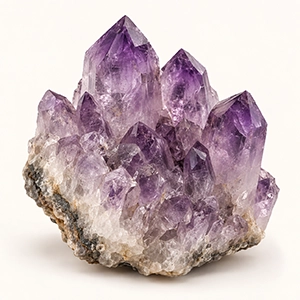 Amethyst
Purple quartz, once a stone of sobriety, linked today with calm and clarity.
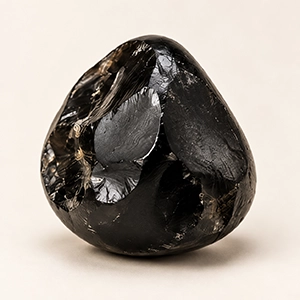 Apache Tear
Small obsidian pebbles from Arizona perlite, linked today with grief and release.
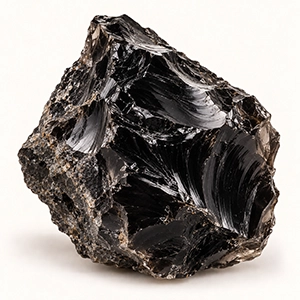 Black Obsidian
Natural volcanic glass, once blades and mirrors, linked today with grounding.
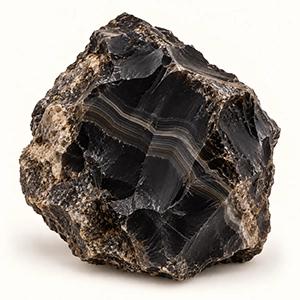 Black Onyx
Black chalcedony of Roman intaglios and cameos, linked today with boundaries.
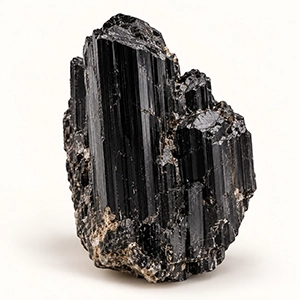 Black Tourmaline
Black schorl tourmaline, a record of the rocks it grew in, linked today with protection.
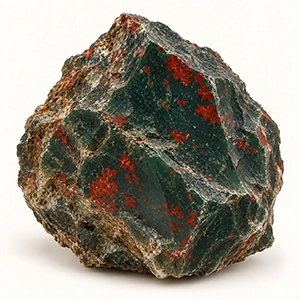 Bloodstone
Green stone flecked with red, the heliotrope of Rome, linked today with courage.
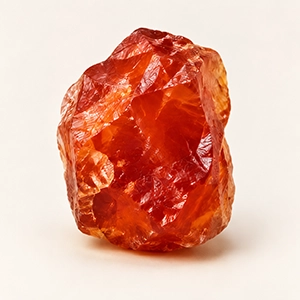 Carnelian
Orange-red chalcedony, carved since the Indus Valley, linked today with vitality.
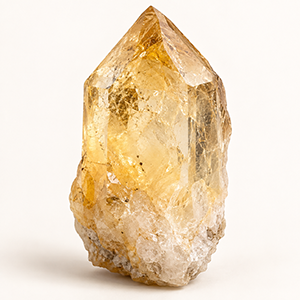 Citrine
Golden quartz, often heated amethyst, linked today with confidence and abundance.
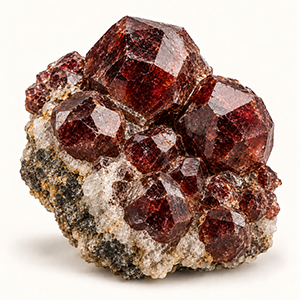 Garnet
A family of deep red gems, worn since ancient Egypt, linked today with vitality.
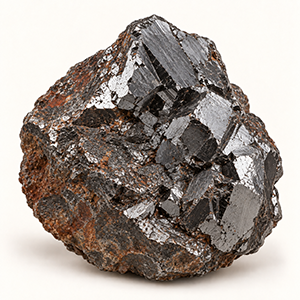 Hematite
Metallic iron mineral, once red ochre and pigment, linked today with grounding.
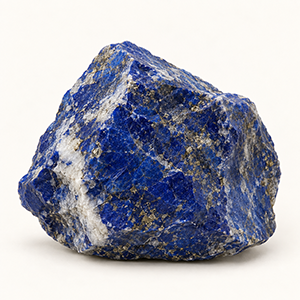 Lapis Lazuli
Deep blue stone from Afghanistan, once ground into the costliest blue in art.
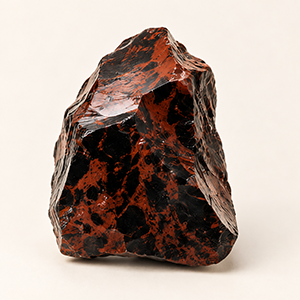 Mahogany Obsidian
Black and red-brown volcanic glass, once mirrors, linked today with resilience.
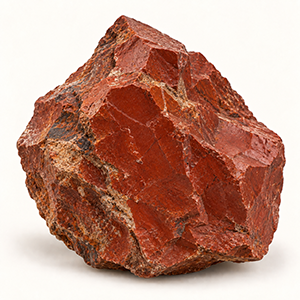 Red Jasper
Opaque red stone of Egyptian amulets and seals, linked today with endurance.
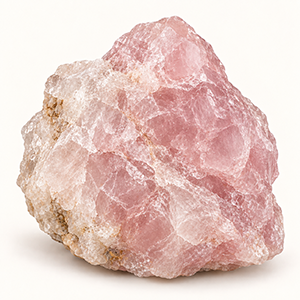 Rose Quartz
Pink quartz, worn for thousands of years, linked today with love and the Heart.
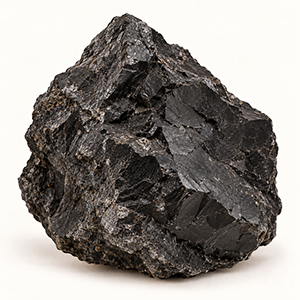 Shungite
Ancient carbon-rich rock from Karelia, linked today with protection and clearing.
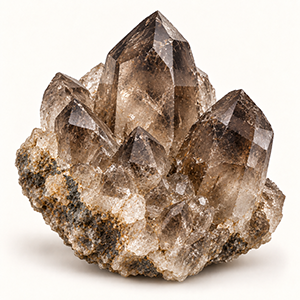 Smoky Quartz
Smoky brown quartz, Scotland’s cairngorm, linked today with gentle grounding.
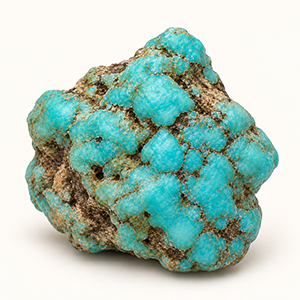 Turquoise
Sky-blue copper mineral, treasured from Egypt to Persia, linked today with protection.